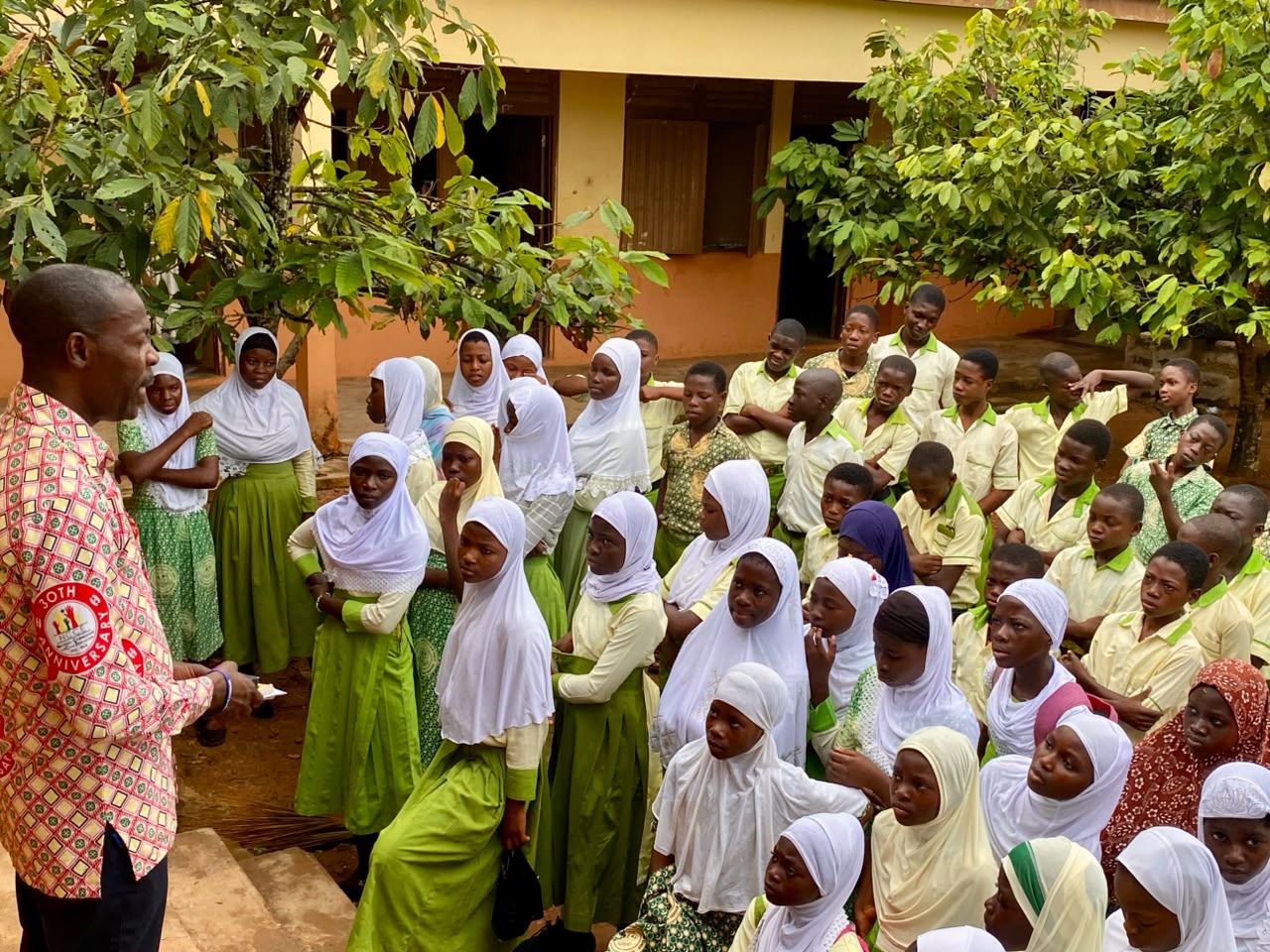
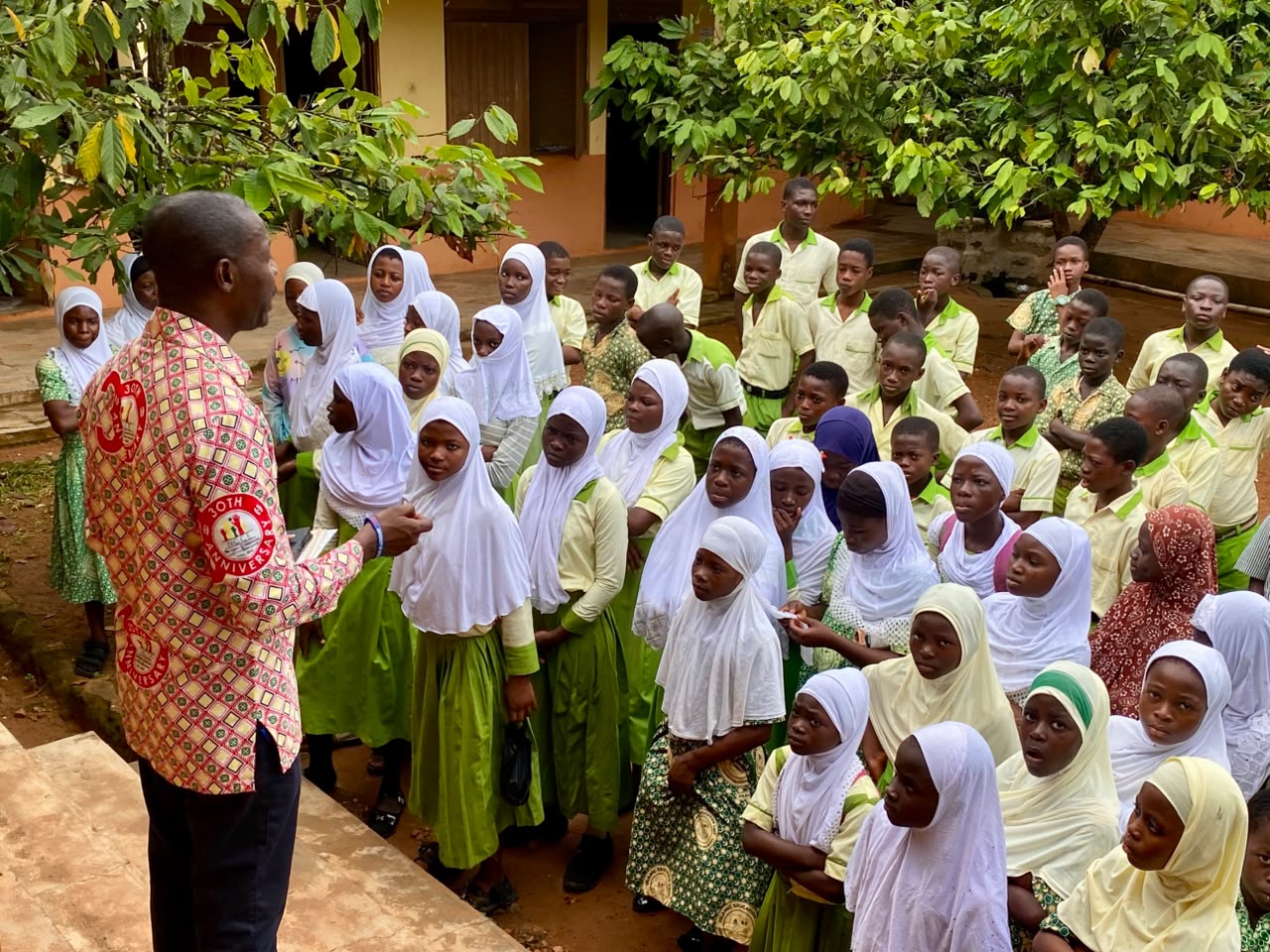
As children increasingly turn to the internet for learning, communication, and entertainment, protecting them from online dangers has become a shared responsibility. Recognizing the need to equip young internet users with the knowledge to navigate the digital space safely, the National Commission for Civic Education (NCCE), through its Agona East District Office, has sensitised pupils of Agona Duakwa Islamic Basic School on cyberbullying, internet fraud and child online abuse.
The sensitisation programme, held at 10:00 a.m. on the school's premises in the Agona East District of the Central Region, formed part of the Commission's public education initiatives aimed at raising awareness of online threats and promoting responsible digital citizenship among children. The engagement brought together 40 participants, comprising 21 males and 19 females, including pupils and teachers.
The exercise was facilitated by Mr. Charles Yaw Ashiafour, Programme Officer (PCEO), and Mr. Solomon Aboagye Dacosta, an NCCE Volunteer.
During the engagement, Mr. Ashiafour educated the pupils on various forms of online abuse, including cyberbullying, online sexual exploitation, exposure to inappropriate content, internet scams, and the misuse of children's personal information.
He cautioned the pupils against sharing sensitive personal details online, responding to inappropriate requests and placing their trust in strangers they encounter on digital platforms. He further encouraged them to exercise caution, think critically before engaging with online content, and use the internet responsibly.
Building on this, Mr. Dacosta urged the pupils not to suffer in silence or feel ashamed when confronted with online harassment, threats, exploitation or inappropriate pressure. He emphasized that seeking help from trusted adults was essential to protecting themselves and preventing further abuse.
He also encouraged the pupils to report such incidents promptly to trusted adults and the appropriate authorities, including the Domestic Violence and Victim Support Unit (DOVVSU) of the Ghana Police Service and the Cyber Security Authority (CSA), through its short code 292 and WhatsApp line 0501603111. Additionally, he highlighted the support services available through the Ministry of Gender, Children and Social Protection, as well as healthcare providers.
The programme equipped the pupils with practical knowledge on identifying online threats, safeguarding their personal information and seeking assistance when necessary.
The Commission reaffirmed its commitment to educating children on their rights and responsibilities while promoting a safer digital environment where young people can learn, interact and express themselves without fear of abuse or exploitation.
_
Follow us on our social media pages for more stories and posts from the NCCE.

https://www.instagram.com/nccegh/

https://www.facebook.com/nccegh/
https://www.youtube.com/channel/UCwajFJmmlmzRf1OMM.
Leave a comment