The National Commission for Civic Education (NCCE) has called for stronger collaboration among state institutions, the media, civil society organisations and other stakeholders to deepen civic education and strengthen Ghana’s democracy.
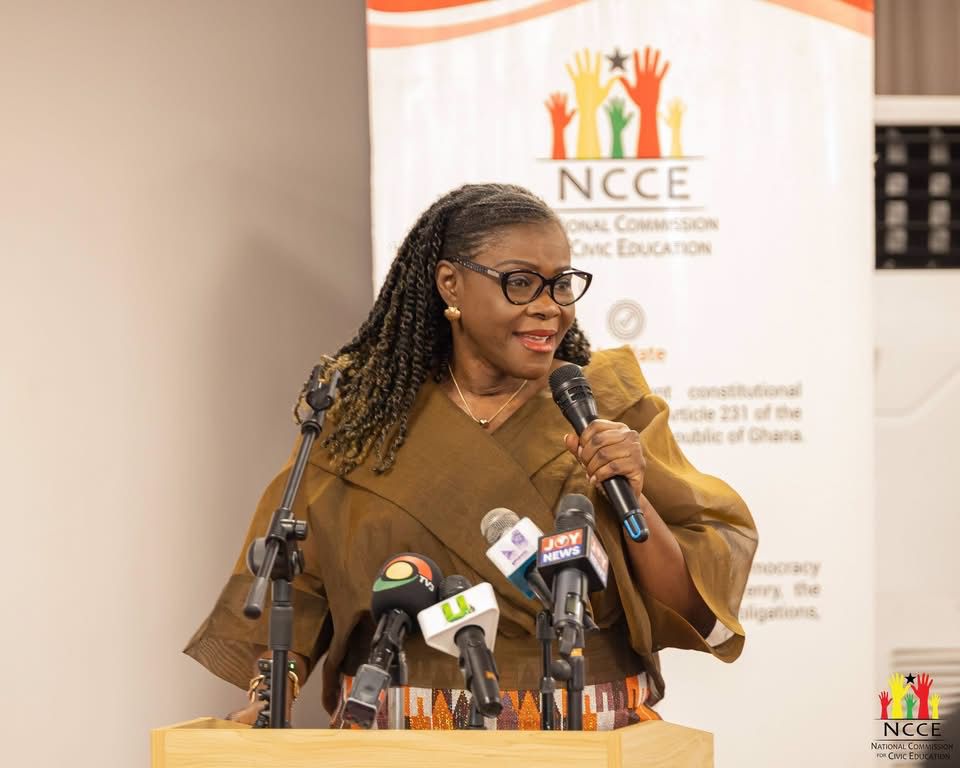
The call was made by its chairperson, Kathleen Addy, during a media encounter held on Thursday, August 27, 2026, on the theme, “Strengthening Civic Education through Strategic Partnerships.”
The Chairperson of the NCCE, Kathleen Addy, said the media remains one of the Commission’s most important partners because of its ability to amplify civic education initiatives and reach a wider section of the population.
She said although the NCCE could achieve significant results on its own, the impact of its work would remain limited without effective media partnerships.
“ We can succeed in some things, but if we don’t have reach, if we don’t have the media to amplify the things that we are doing, we will not be as impactful as we can be”.
Mrs Addy also urged the media to undertake deeper introspection and reflect on its constitutional responsibility in Ghana’s democratic development.

She noted that the 1992 Constitution dedicates an entire chapter to the freedom and independence of the media, while Article 162 places a responsibility on the media to uphold the principles, provisions and objectives of the Constitution and hold government accountable to the people.
She therefore stressed the need for the media to continue playing its role responsibly in “protecting and strengthening Ghana’s democratic gains”.
In a speech delivered on his behalf by the Member of Parliament for Daboya/Mankarigu, Shaibu Mahama, the Speaker of Parliament also called for increased investment in civic education, particularly among young people.
He said initiatives such as Civic Education Clubs, Project Citizen and CivicFest provide young people with practical opportunities to understand citizenship and democratic participation and must therefore be strengthened and expanded.
He stressed that civic education should move beyond classrooms and lecture halls to give young people practical opportunities to identify problems in their communities, engage duty-bearers and participate in finding solutions.
“This is how we build a generation that does not merely complain about society, but feels empowered to contribute to changing that society,” he said.

He also highlighted the growing influence of social media and digital platforms on democratic participation, saying while the platforms had created unprecedented opportunities for citizens to engage leaders and contribute to national discourse, they also came with responsibilities.
He cautioned that freedom of expression should not be used as a justification for spreading false information, hatred or abuse.
According to the speaker, “Anonymity does not justify abuse. And disagreements must never become an excuse for violence. We must therefore promote responsible digital citizenship”
The encounter provided a platform for the NCCE and its partners to reflect on Ghana’s democratic journey, reaffirm the importance of civic education and explore ways of leveraging strategic partnerships to promote active, informed and responsible citizenship.
It brought together stakeholders including the Deputy Ambassador of the European Union, the Executive Secretary of the National Media Commission, executives of the Ghana Journalists Association, representatives of PRIMPAG, the Chief Imam’s spokesperson, UNICEF and other partners.
Source: metrotvonline
_
Follow us on our social media pages for more stories and posts from the NCCE.

https://www.instagram.com/nccegh/

https://www.facebook.com/nccegh/
https://www.youtube.com/channel/UCwajFJmmlmzRf1OMM.
Leave a comment