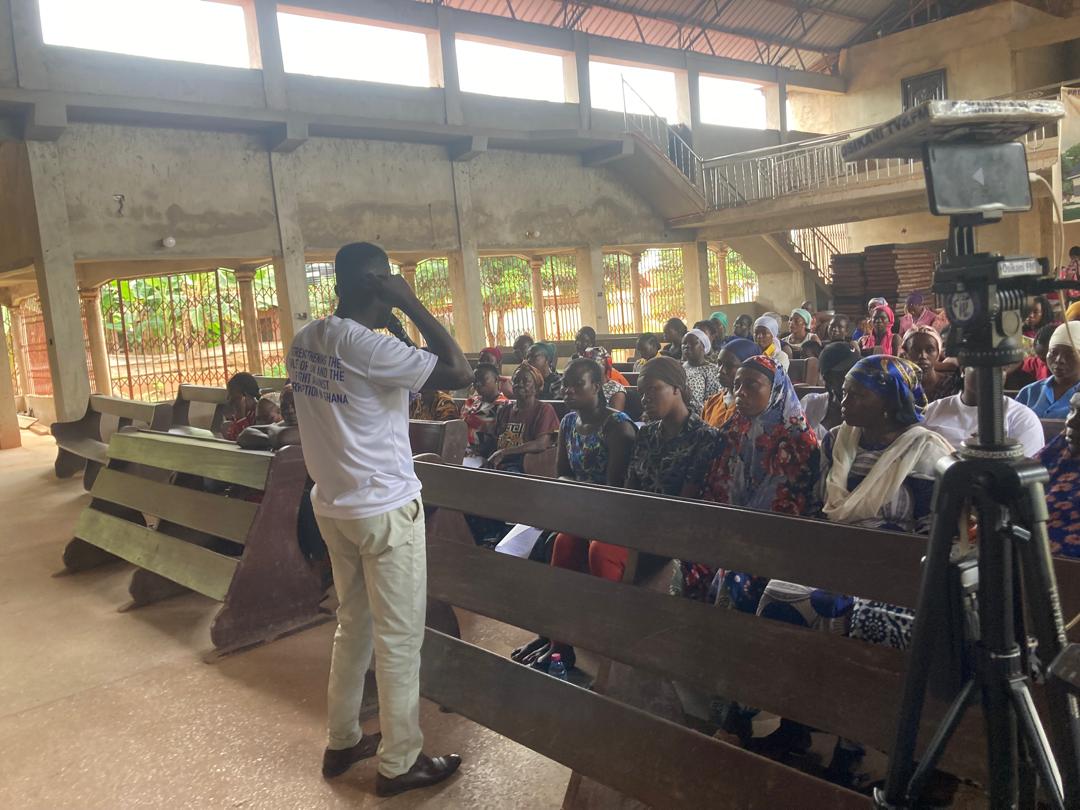
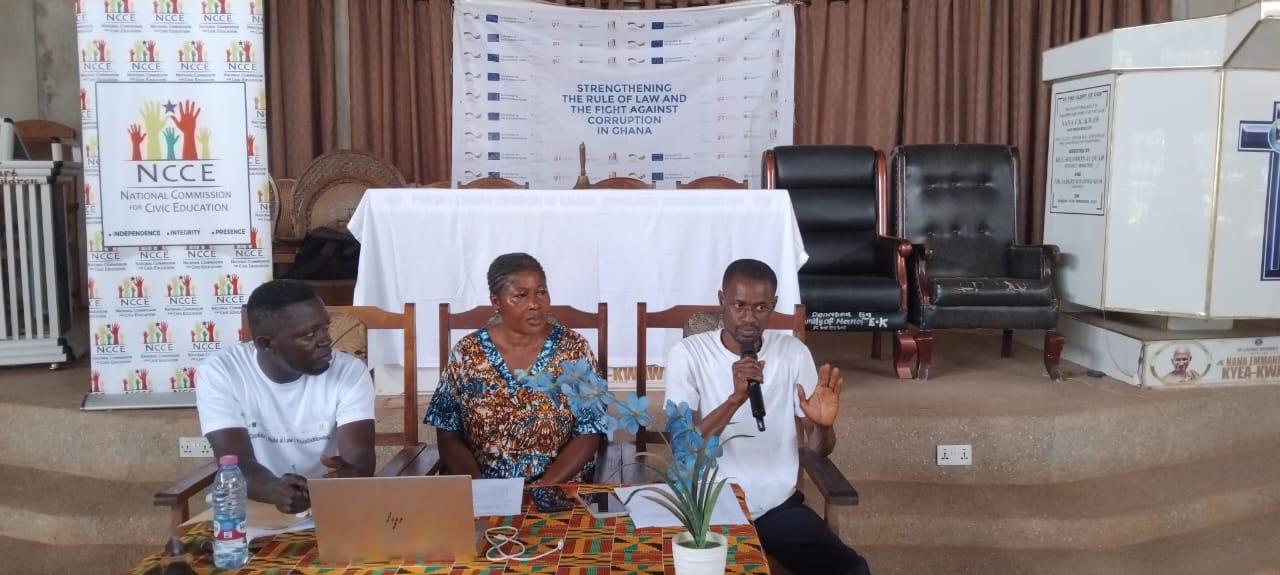
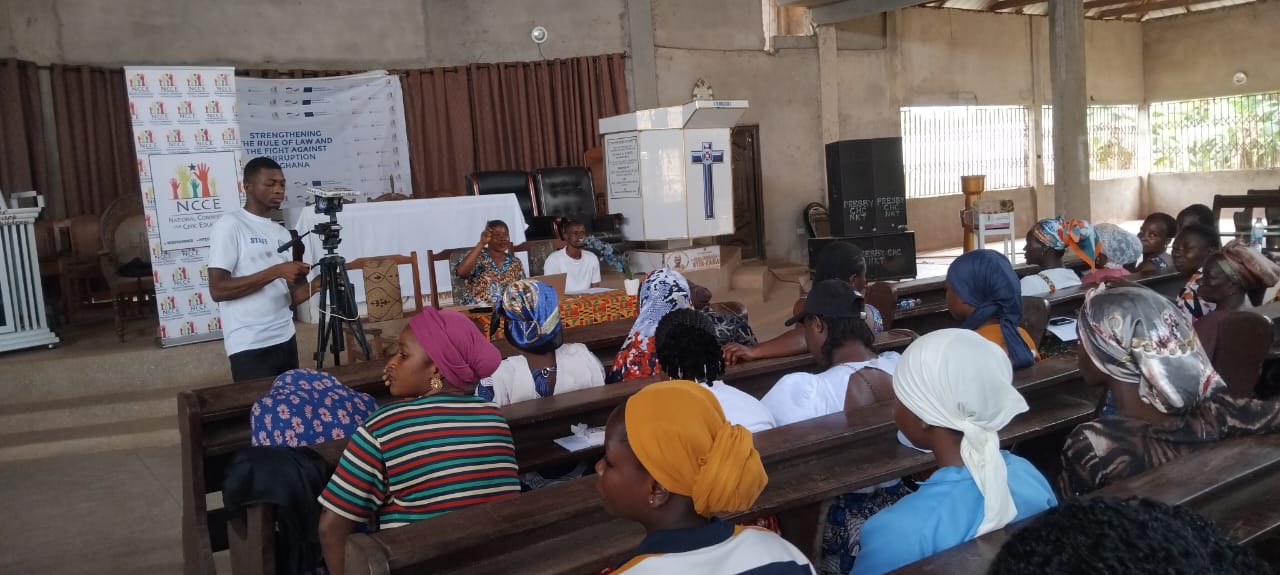
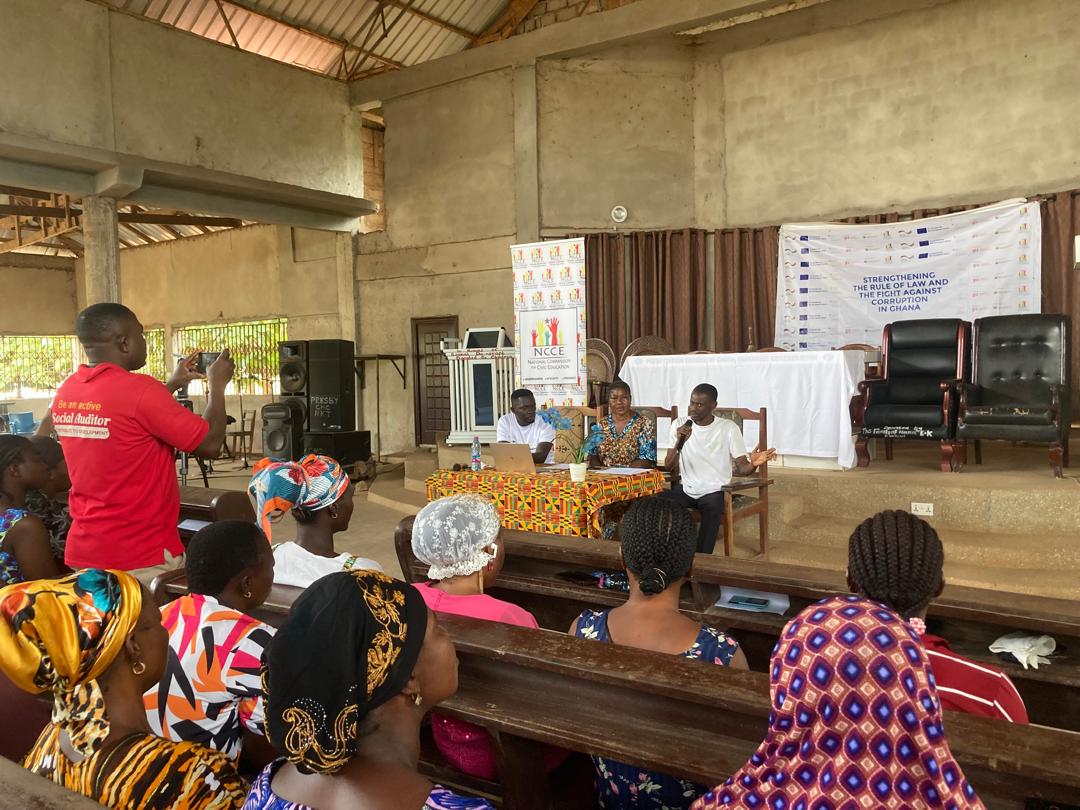
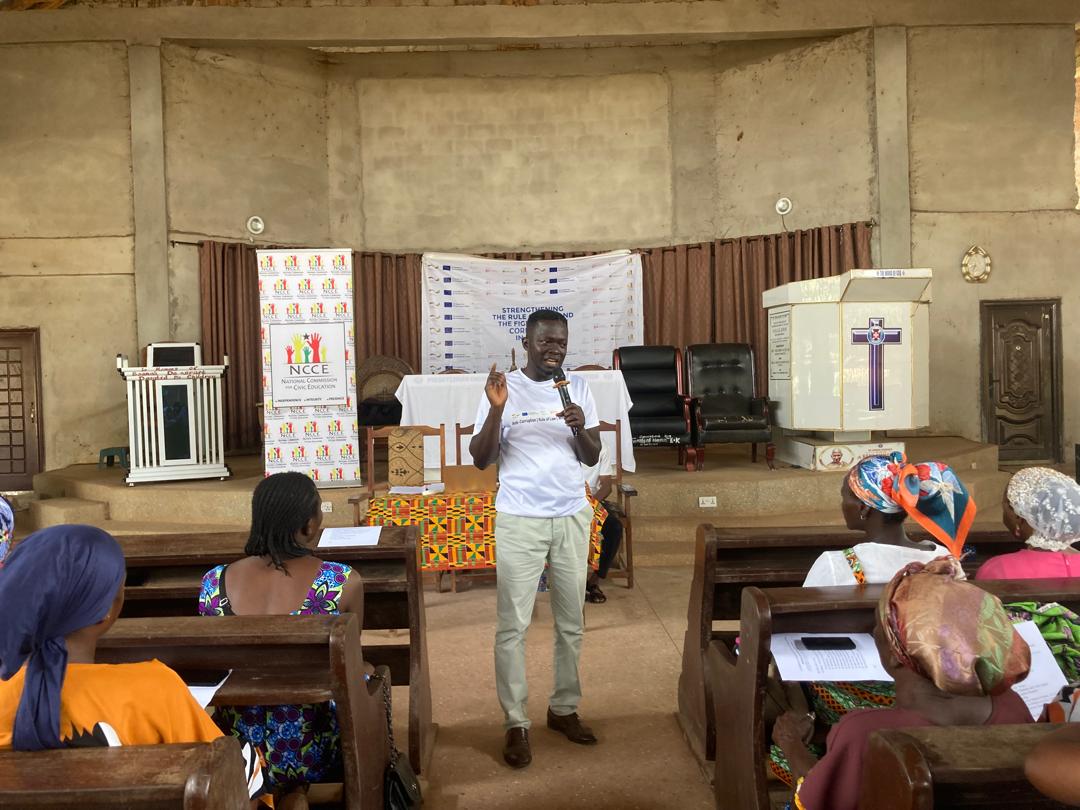
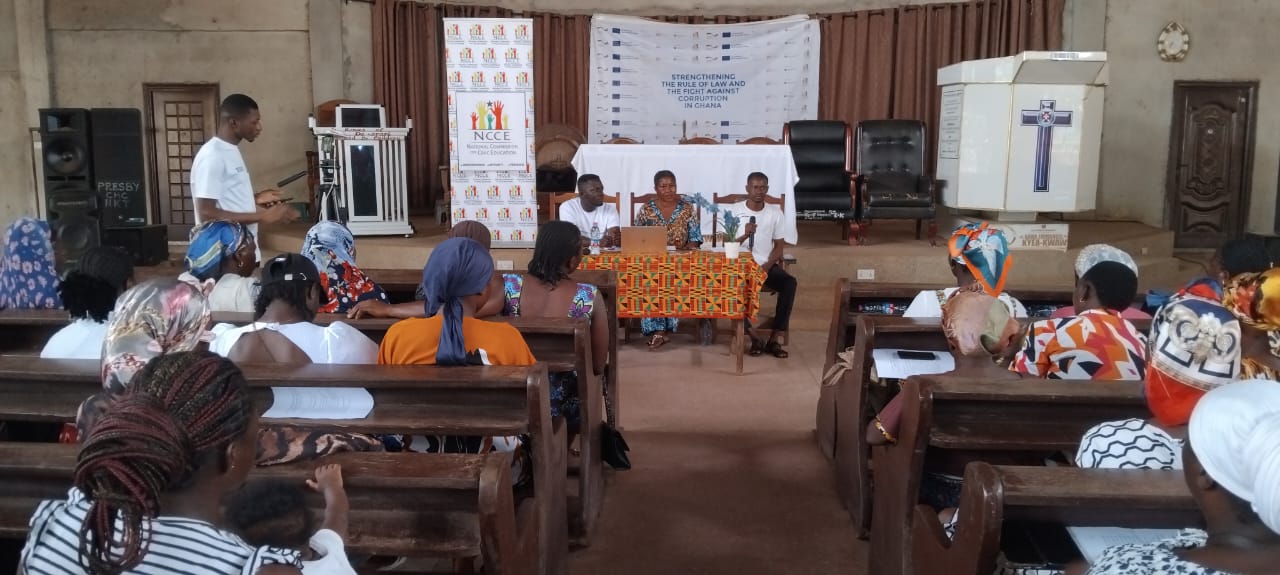
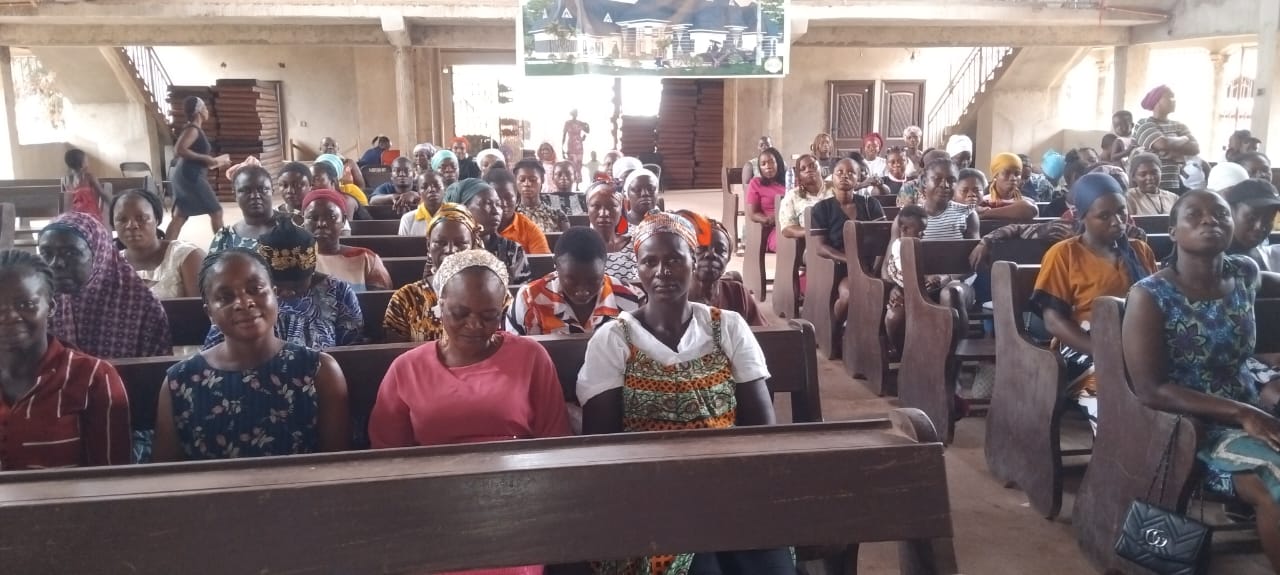
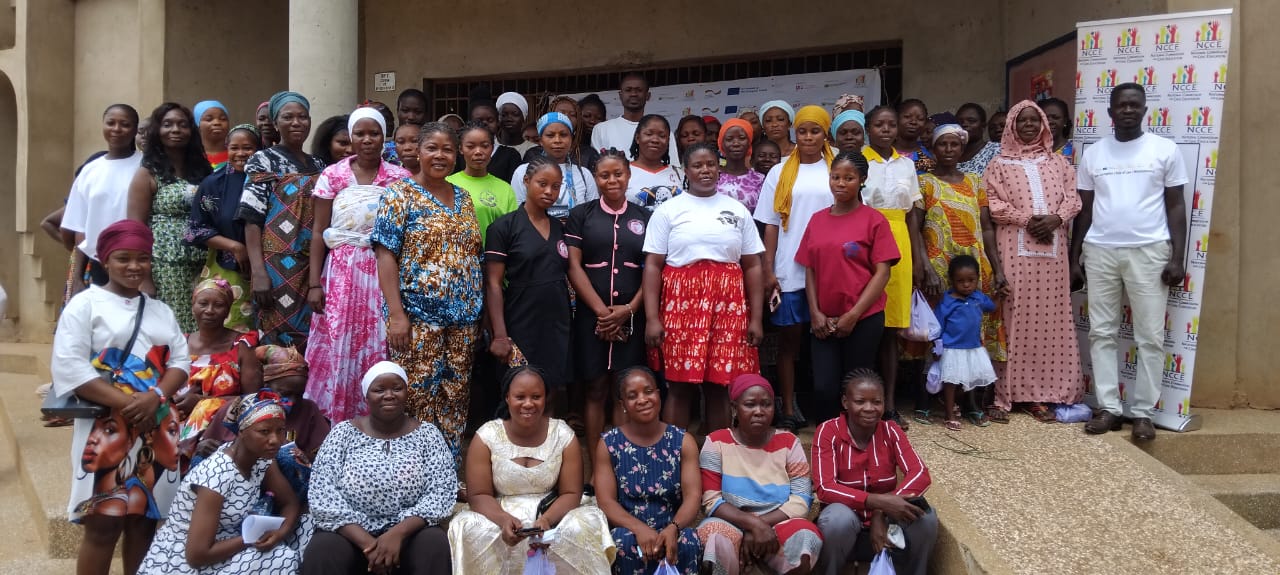
The Dormaa West NCCE sensitised several women's groups on the need to support the fight against corruption. This engagement was held at the Presbyterian Church, Nkrankwanta. Participants from different women's groups such as the Kussase and the Zamerama Associations, women leaders in faith-based organizations, physically challenged women, and women leaders of Hairdresser and Dressmaker associations were drawn to benefit.
The sensitization was executed under the theme: “Strengthening the Rule of Law and the Fight Against Corruption in Ghana”. The sensitization carried out was under the Participation, Accountability and Integrity for a Resilient Democracy (PAIReD) Programme. The programme was commissioned by the German Federal Ministry for Economic Cooperation and Development (BMZ) and co-funded by the European Union (EU) and the Swiss State Secretariat for Economic Affairs (SECO), implemented by GIZ in Cooperation with the Ministry of Finance.
The objectives of the sensitization were to review and reinforce key messages from an initial educational campaign with the same women groups executed on the 28th of October,2025. Further was to assess participants’ experiences in applying the knowledge gained in the previous encounter and strengthen women’s confidence to identify, resist, report, and prevent corrupt practices. Again, encouraging women to become peer educators and advocates for integrity, accountability, and the Rule of Law within their associations and communities was key.
During the Programme, the officer-in-charge for the Dormaa West NCCE (Attah, Emmanuel) took participants through a recap session on the previous engagement to assess whether they could remember the previous engagement presentations and how it was applied. He mentioned that the Right to Information Act 989 (Act 2019) and Article 21, Clause 1, paragraph(f) of the 1992 Constitution grant every person the right to access information. Hence, the right to demand accountability.
He further tasked participants to educate peers and advocate for integrity, accountability and the rule of law within their associations and communities.
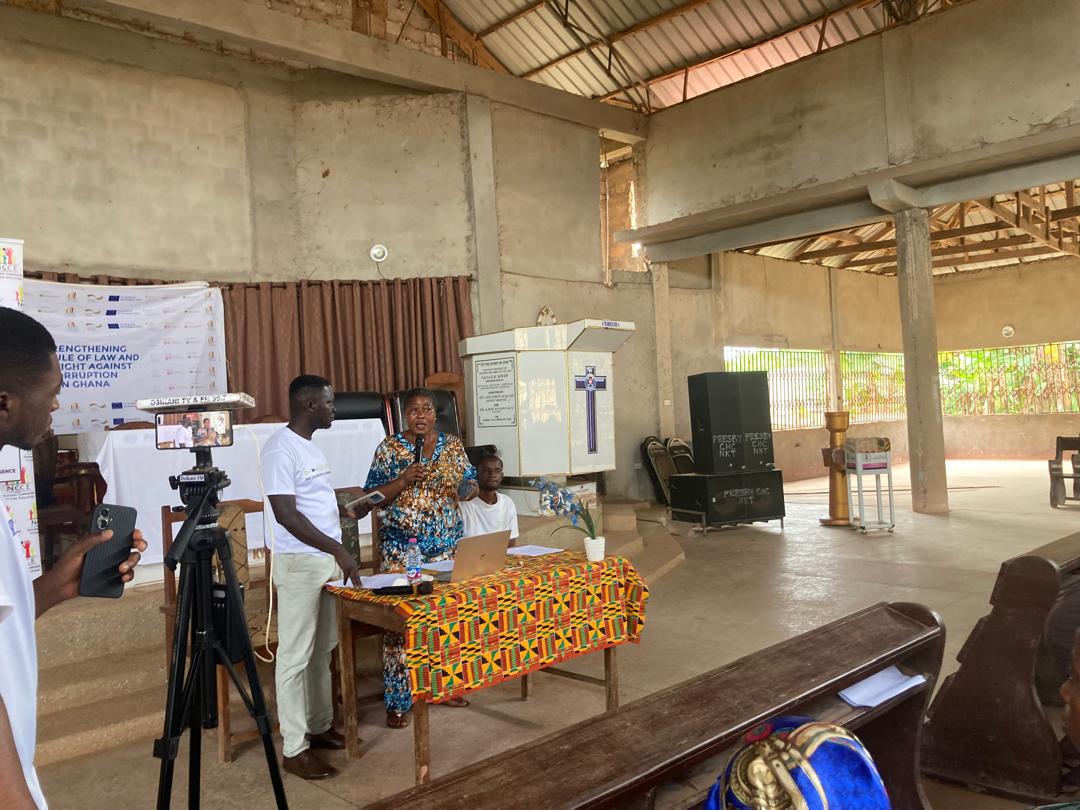
Mrs. Francisca Acquah, who chaired the programme, also encouraged participants to speak out when they suspect an act to be corrupt. She further admonished that speaking out must be done respectfully, especially when demanding accountability and transparency from duty bearers.
Mr. Hassan Gawusu (CHRAJ Officer) also advised participants to report any unfair treatment that undermines human rights to the CHRAJ office for investigations and further action. He further said the Ghana Police Service, Office of the Special Prosecutor, Economic and Organized Crime Office (EOCO), CHRAJ and the like were instituted to investigate and prosecute crime perpetrators.
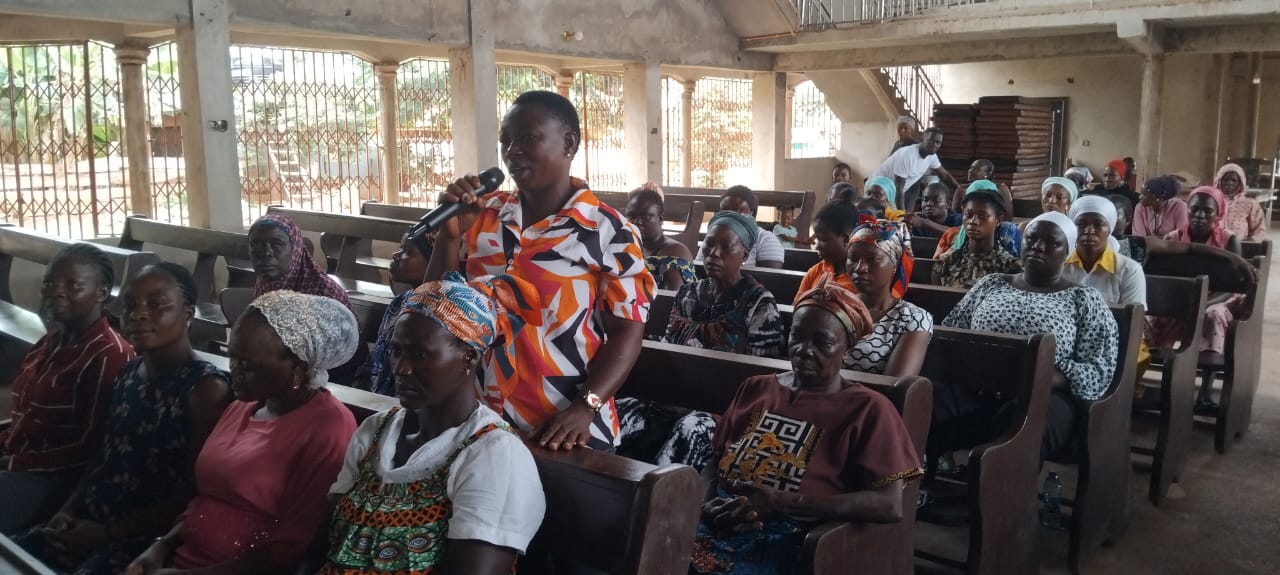
Testimonies from some participants, because of the previous engagement’s knowledge gained, were appreciated. At the end of the programme, Google questions designed by the NCCE in relation to the programme were answered by some participants under the supervision of NCCE staff. Feedback and reactions were encouraging. Some participants suggested that the NCCE should execute more such empowerment programmes to benefit many rural folks.
_
Follow us on our social media pages for more stories and posts from the NCCE.

https://www.instagram.com/nccegh/

https://www.facebook.com/nccegh/
https://www.youtube.com/channel/UCwajFJmmlmzRf1OMM.
Leave a comment