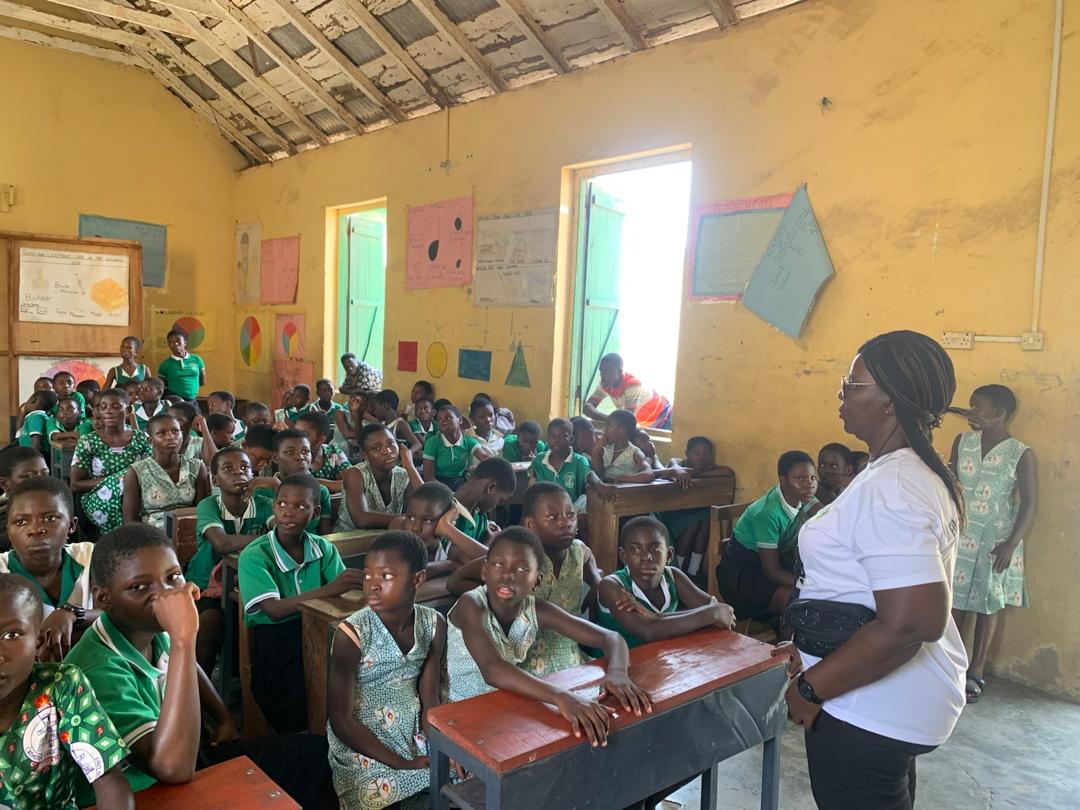
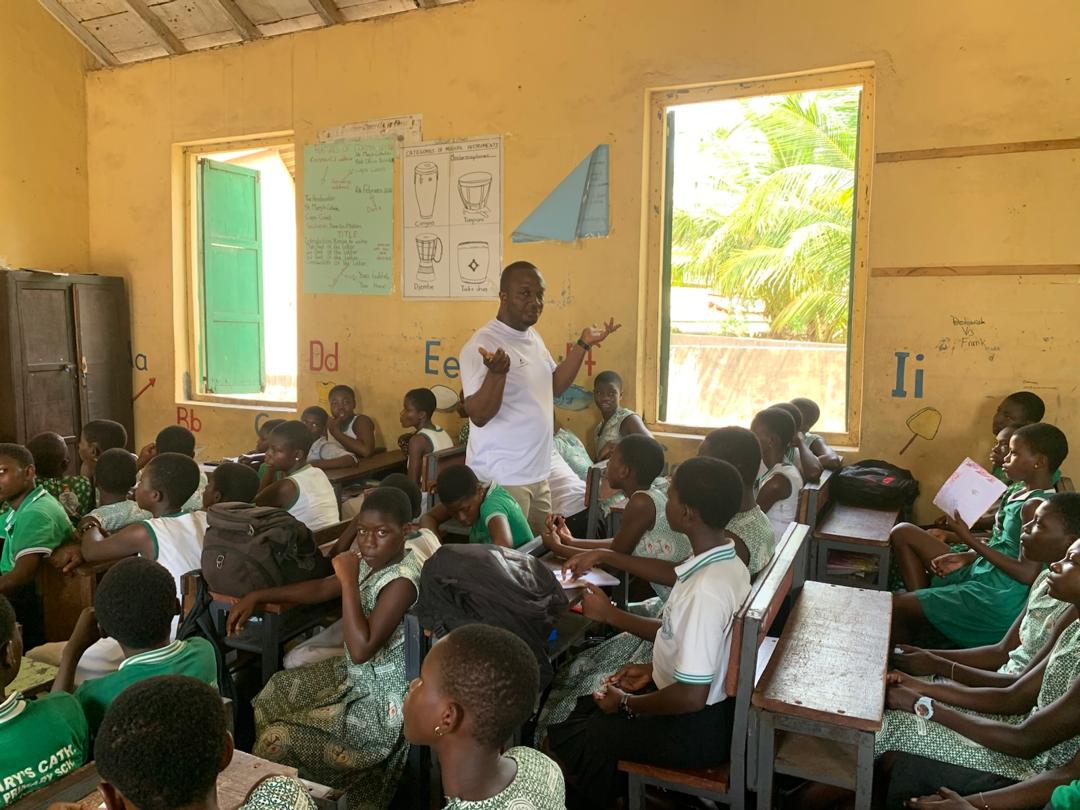
On Friday 13th February 2026, Fred Mac Ocloo [Assistant Director] and Vivian Affor [CEO] engaged 109 students of St. Mary’s Girls JHS in Cape Coast on the topic, “Our Core Ghanaian Values,” as part of efforts to strengthen civic responsibility and good conduct among learners. The engagement formed part of the Commission’s broader approach to promoting national values through school based civic education, with emphasis on shaping attitudes that support respectful living, unity, and responsible participation in community life.
The facilitators guided students through values that promote discipline, mutual respect, and peaceful coexistence. Key areas covered included respect for the elderly and authority, courteous speech, and the need to communicate without insults in everyday interactions at school and at home. Students were encouraged to demonstrate these values through simple but consistent actions, including showing regard for teachers and parents, resolving disagreements calmly, and speaking in a manner that builds understanding rather than conflict. The session stressed that the quality of language used in classrooms, peer conversations, and social settings can either strengthen relationships or undermine harmony, and that good citizenship begins with how people treat one another.
The engagement further discussed the importance of performing civic duties and responsibilities, with reference to Article 41 of the 1992 Constitution, which highlights obligations expected of citizens. Students were encouraged to practise responsible behaviour by respecting school rules, cooperating with school leadership, and contributing positively to their communities through responsible choices and constructive conduct. The facilitators also urged students to serve as good examples among their peers by promoting unity, discouraging negative behaviour, and supporting a culture of fairness and respect within the school environment. The session emphasised that civic duties are not limited to adults, and that young people also play an important role in protecting shared values and sustaining good community relations.
Environmental responsibility was also emphasised as an aspect of good citizenship and public order. The students were advised to avoid littering, reduce plastic use to limit waste, and support proper sanitation practices within the school and their neighbourhoods. The discussion also addressed indiscriminate defecation and its impact on cleanliness and healthy living, with students encouraged to uphold hygiene and sanitation standards and to influence others through good example. The facilitators noted that protecting the environment and maintaining clean surroundings are practical ways citizens contribute to public health, dignity, and the overall well being of society.
The engagement ended with a call on students to apply the lessons in their daily lives by demonstrating respect, responsible speech, good behaviour, and environmental cleanliness, so that the values discussed become visible habits that strengthen the school community and contribute to national development.
_
Follow us on our social media pages for more stories and posts from the NCCE.

https://www.instagram.com/nccegh/

https://www.facebook.com/nccegh/
Leave a comment