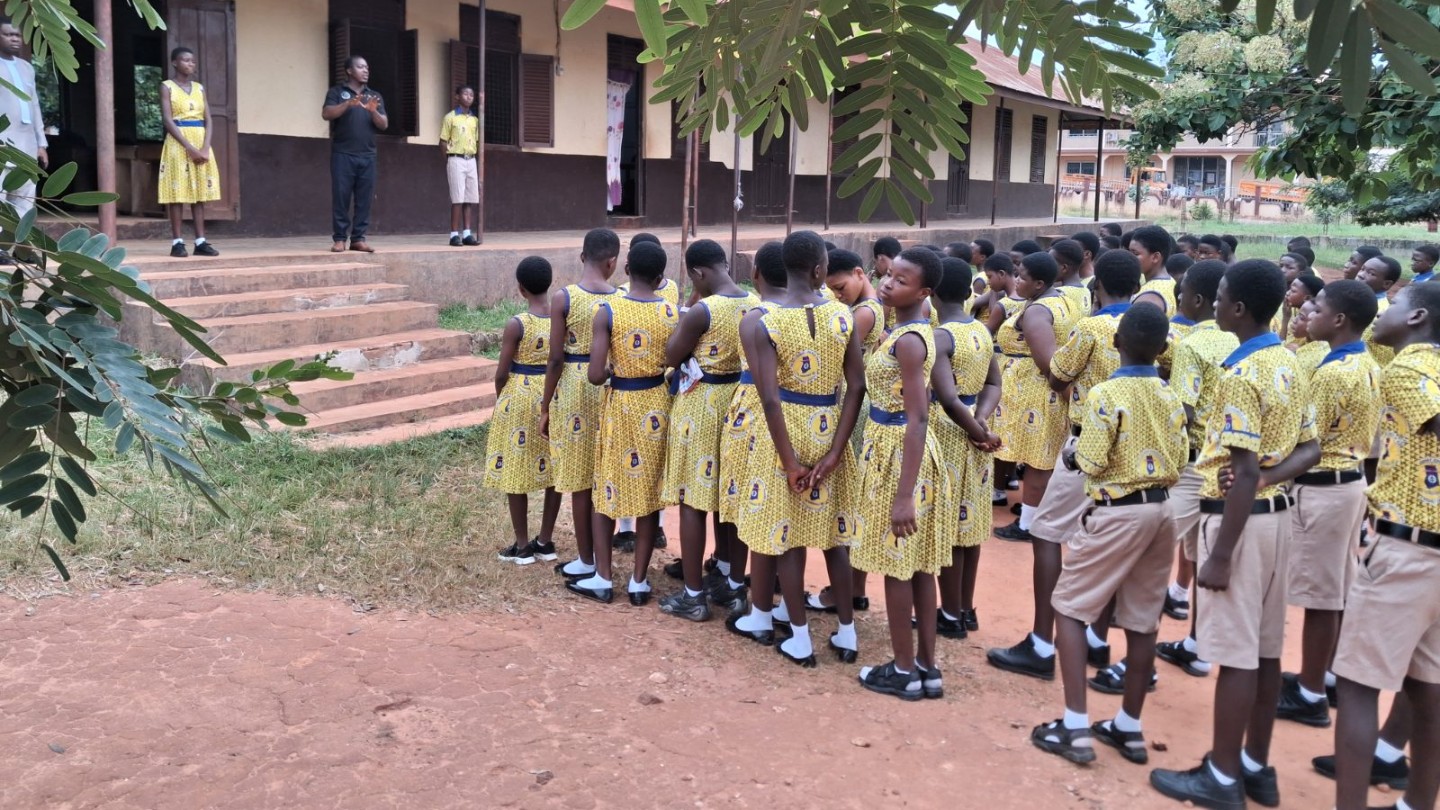
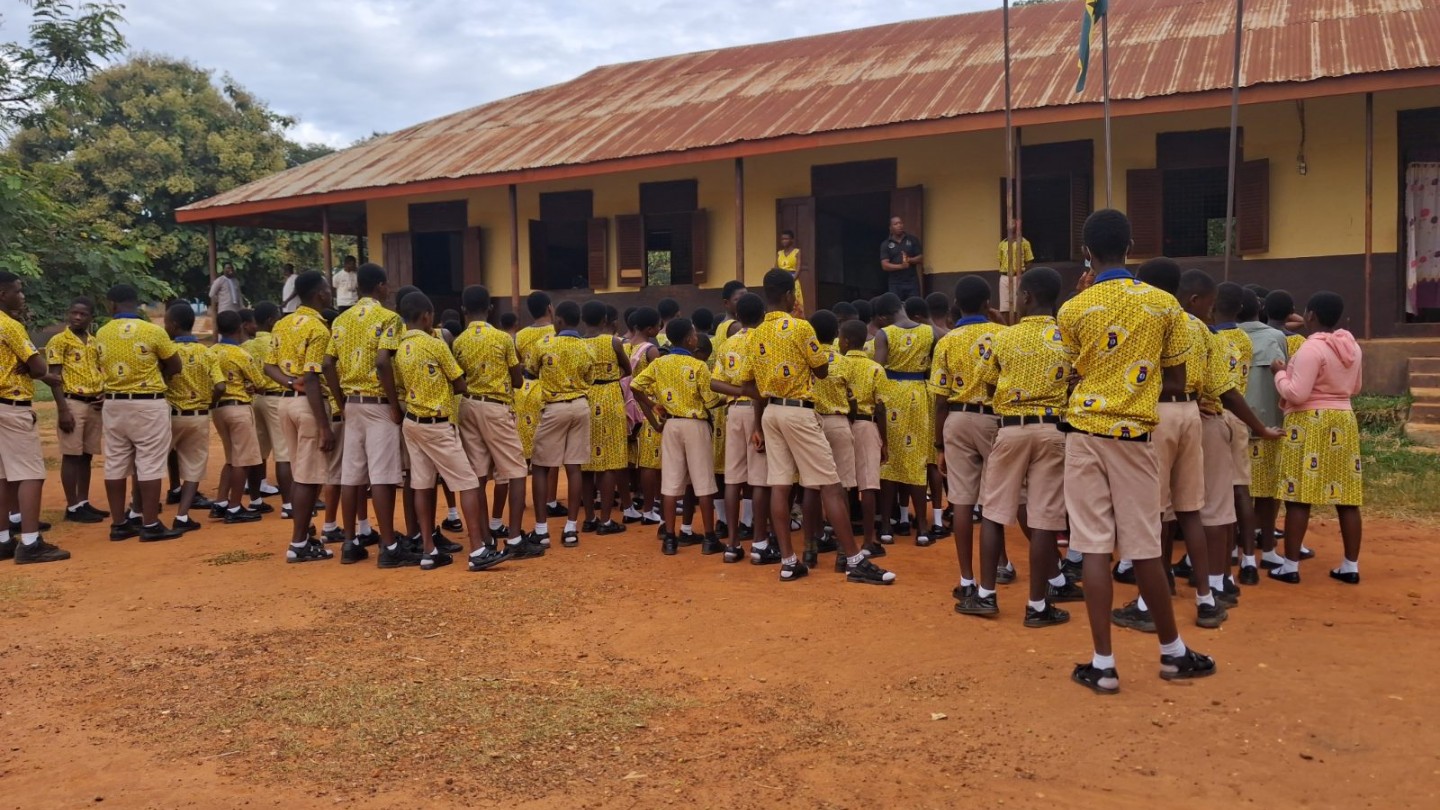
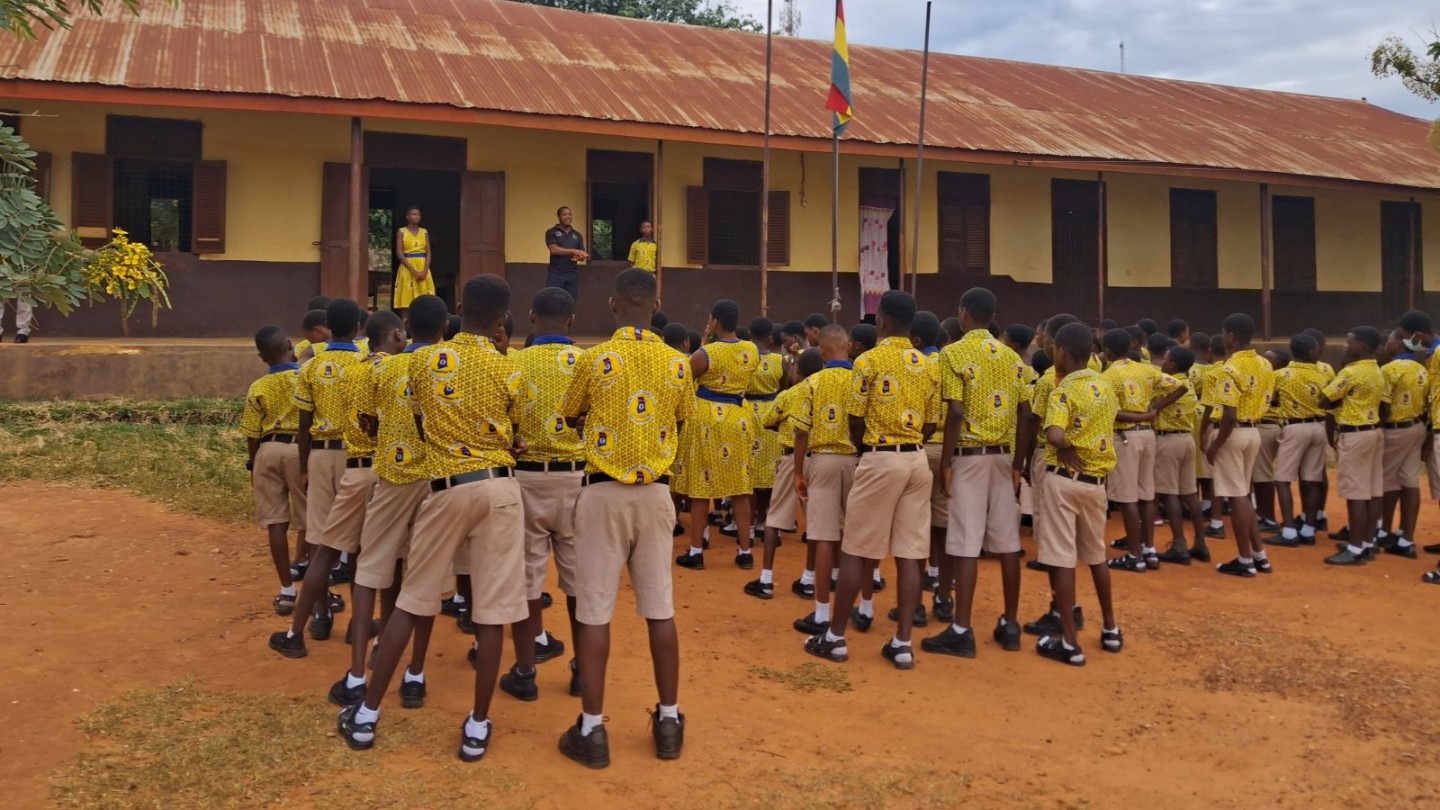
The Asunafo North Municipal Directorate of the National Commission for Civic Education has marked this year’s Citizenship Week Celebration with a sensitisation activity for students of Goaso Methodist Junior High School on responsible digital citizenship.
The engagement sought to educate young people on the need to use digital platforms wisely while upholding the values of the 1992 Constitution both online and offline. It also formed part of the Commission’s efforts to help students understand their rights, responsibilities, and the risks associated with irresponsible online behaviour.
Leading the session, the Asunafo North Municipal Director of the NCCE, Mr. Harris Quansah, emphasised the relevance of Ghana’s 1992 Constitution in guiding citizens’ conduct in both physical and digital spaces. He explained that Article 41 of the Constitution outlines the duties of citizens, including the duty to uphold and defend the Constitution and the law, respect the rights and freedoms of others, and promote the good name of Ghana.
Mr. Quansah noted that children, like adults, have rights and responsibilities in the digital environment. He explained that while young people have the right to access information, learn, communicate, and express themselves online, they must do so with discipline, respect, and awareness of the rights of others.
Referring to the Children’s Act, 1998 (Act 560), he reminded the students that children are entitled to protection from abuse, neglect, exploitation, and harmful practices. He noted that such protection is also relevant in the digital space, where children may be exposed to cyberbullying, online harassment, harmful content, deception, and unsafe interactions.
Mr. Quansah also referenced the Cybersecurity Act, 2020 (Act 1038), explaining that Ghana has legal frameworks to address cyber-related threats and promote safer use of digital systems. He cautioned students against engaging in cyberbullying, spreading false information, sharing harmful content, or exposing personal details online.
“Social media can be a tool for learning and connection, but it must be used wisely,” he said. He urged pupils to verify information before sharing, avoid insulting others online, and protect personal information such as passwords, locations, school details, and private images.
As a call to action, Mr. Quansah encouraged the students to become ambassadors of peace, discipline, truth, and constitutional values. He urged them to use technology positively to support learning, promote unity, respect others, and contribute to Ghana’s democratic development.
The engagement ended with a reminder that responsible digital citizenship begins with individual choices and that young people have an important role to play in creating a safer and more respectful online environment.
_
Follow us on our social media pages for more stories and posts from the NCCE.

https://www.instagram.com/nccegh/

https://www.facebook.com/nccegh/
Leave a comment