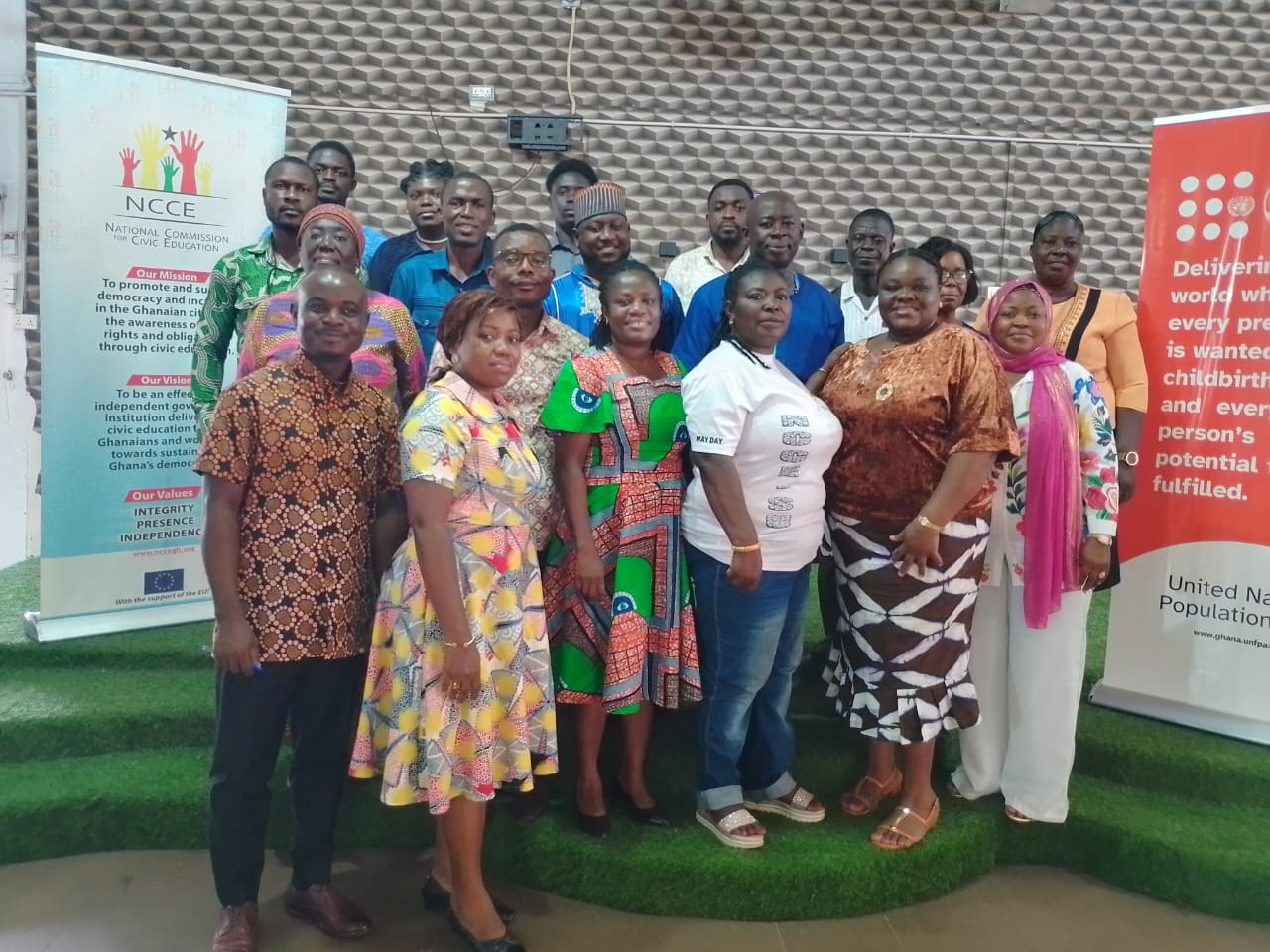
Stakeholders from various sectors gathered at Bompata in the Ashanti Region for a Community Stakeholder Engagement Meeting organized by the Ashanti Regional Directorate of the National Commission for Civic Education (NCCE) to advance discussions on adolescent sexual and reproductive health, gender equality, and the prevention of Gender-Based Violence (GBV).
The programme, held at the Church of Pentecost Auditorium, formed part of activities under the Adolescent Girls Programme (AGP), which is supported by Global Affairs Canada and implemented by the United Nations Population Fund (UNFPA) and the United Nations Children's Fund (UNICEF). The engagement sought to strengthen community awareness and enhance collaboration among stakeholders in addressing challenges affecting adolescents and vulnerable groups.
The meeting brought together representatives from government institutions, traditional and religious authorities, civil society organizations, the health sector, security agencies, youth groups, and other key stakeholders. Participants deliberated on practical strategies for promoting adolescent well-being, advancing gender equality, and eliminating harmful social norms and practices.
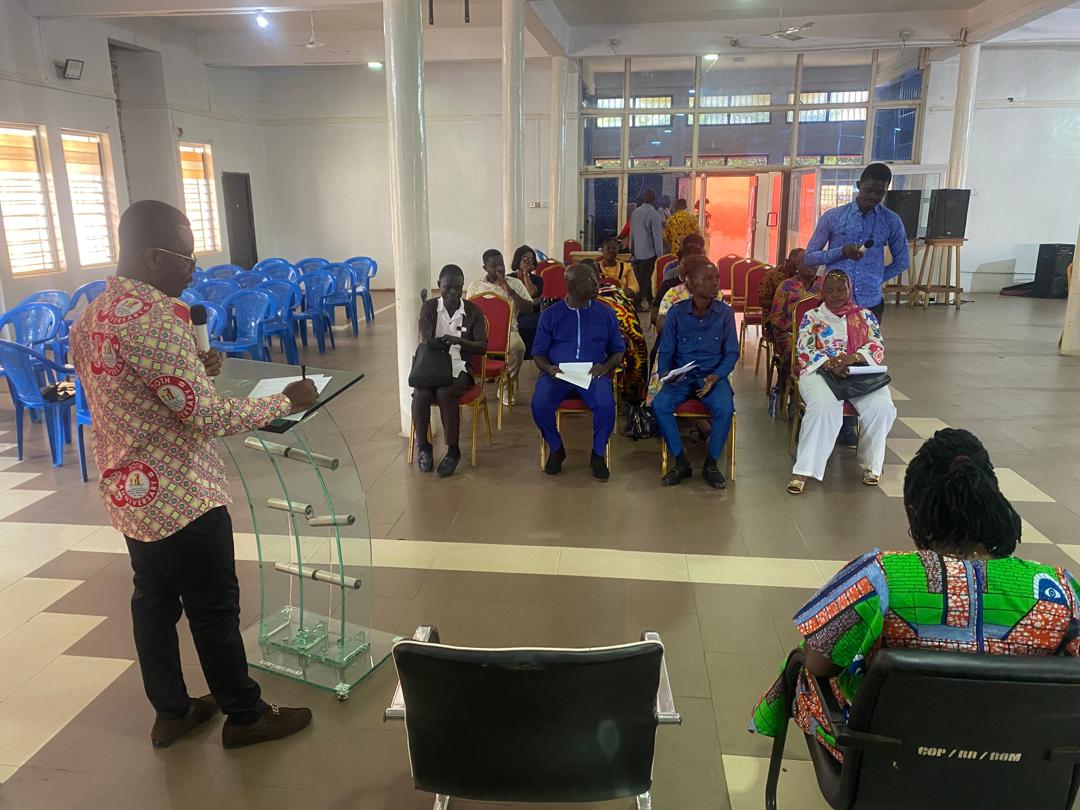
In her welcome address, Madam Akua Zakaria of the NCCE emphasized the importance of collective responsibility in safeguarding the rights, welfare, and future of adolescents. She noted that addressing gender-based violence and harmful practices requires coordinated efforts from families, communities, institutions, and development partners.
The programme featured a series of presentations by experts from relevant sectors. Delivering the first presentation, Mrs. Rita Nunoo of the Ministry of Health spoke on Adolescent Sexual and Reproductive Health, highlighting issues such as adolescent pregnancy, menstrual hygiene management, sexually transmitted infections, and the need for young people to access youth-friendly health services. She stressed the importance of providing adolescents with accurate information to enable them to make informed decisions concerning their health and well-being.
The second presentation was delivered by Miss Ama Nyanta of the Department of Gender, who addressed the issue of Gender-Based Violence and Harmful Social Norms. She called on communities to challenge cultural practices and social attitudes that perpetuate discrimination, abuse, and inequality. According to her, protecting women, girls, and other vulnerable groups requires a collective commitment to promoting respect, dignity, and equal opportunities for all.
Transitioning from awareness to legal protection, the final presentation was delivered by Miss Akua Zakaria, Deputy Regional Director of NCCE, on the laws and regulatory frameworks relating to Adolescent Sexual and Reproductive Health and Rights (SRHR). She educated participants on the legal provisions designed to protect adolescents and emphasized the need for effective enforcement of these laws to safeguard their rights and welfare.
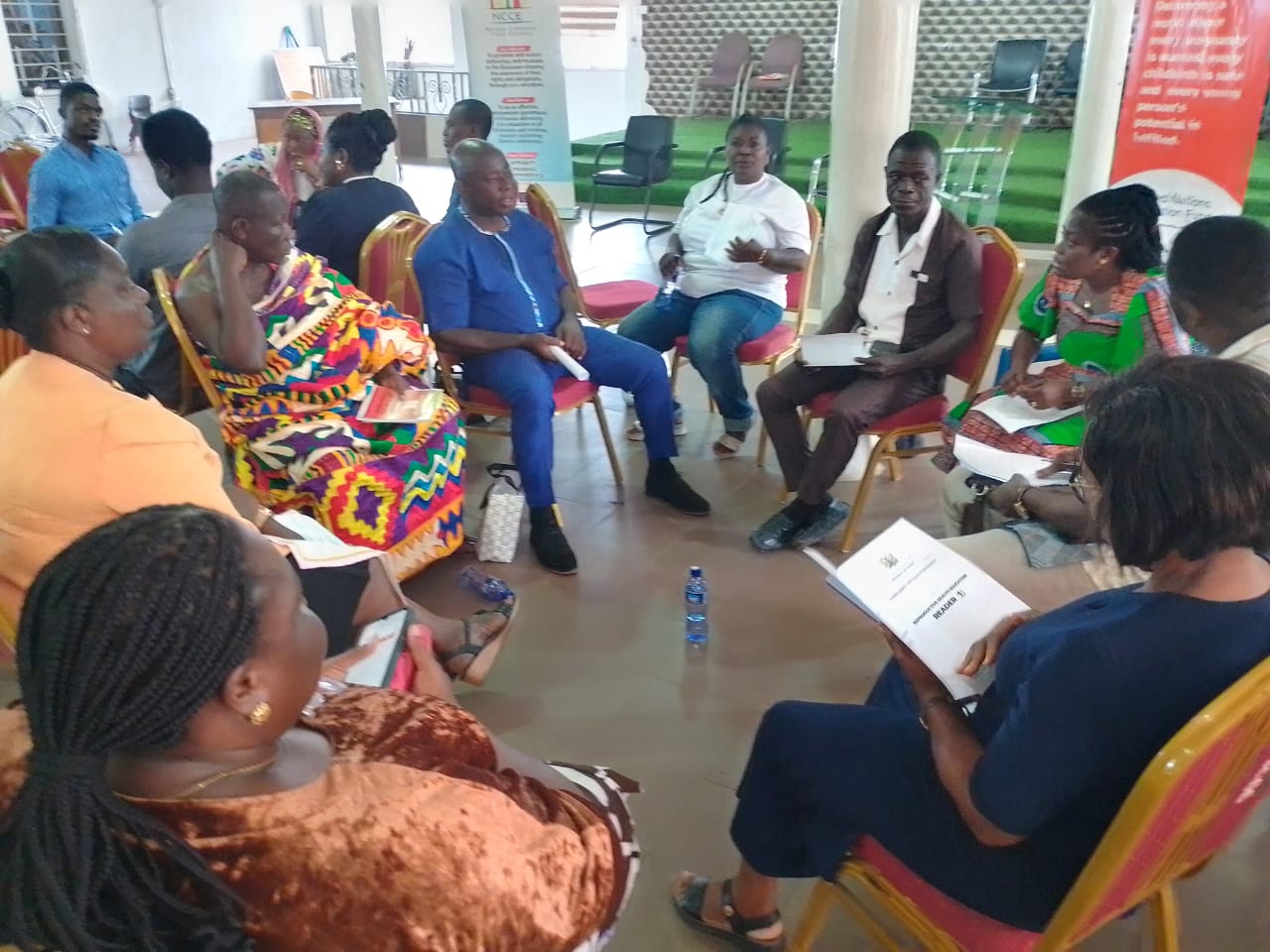
To encourage active participation and knowledge sharing, participants were divided into discussion groups to identify key challenges associated with Sexual and Reproductive Health Rights and Gender-Based Violence within their communities. The groups examined the underlying causes of these challenges and proposed practical, community-driven solutions to address them.
The group discussions were followed by an interactive plenary session during which participants shared experiences, exchanged ideas, and made recommendations aimed at strengthening stakeholder collaboration and improving community responses to issues affecting adolescents.
Among the key recommendations were the intensification of public education campaigns, strengthening referral and support systems for survivors of abuse, improving access to adolescent-friendly services, and promoting positive social and gender norms that foster inclusion and equality.
The programme concluded with participants reaffirming their commitment to supporting initiatives that promote adolescent health, prevent gender-based violence, and protect the rights of young people. They also pledged to work collaboratively within their respective institutions and communities to advance the objectives of the programme.
The Ashanti Regional Directorate of NCCE expressed appreciation to all stakeholders, resource persons, and participants for their contributions and reiterated its commitment to working with partners to build safer, healthier, and more inclusive communities where adolescents can thrive and achieve their full potential.
_
Follow us on our social media pages for more stories and posts from the NCCE.

https://www.instagram.com/nccegh/

https://www.facebook.com/nccegh/
Leave a comment