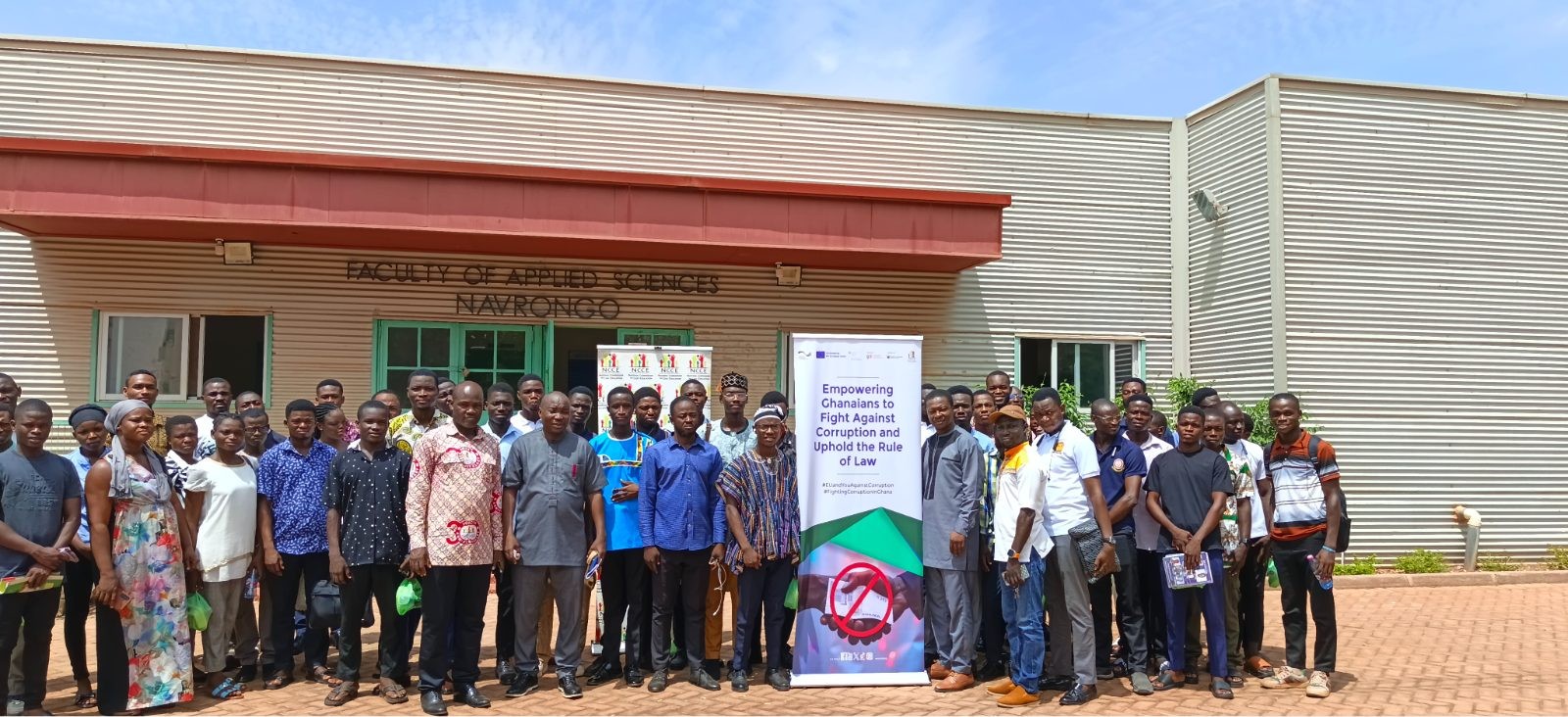
Student leaders of the University of Technology and Applied Sciences (UTAS) in Navrongo have been challenged to become ambassadors of integrity, accountability, and ethical leadership in order to help combat corruption and strengthen democratic governance in Ghana.
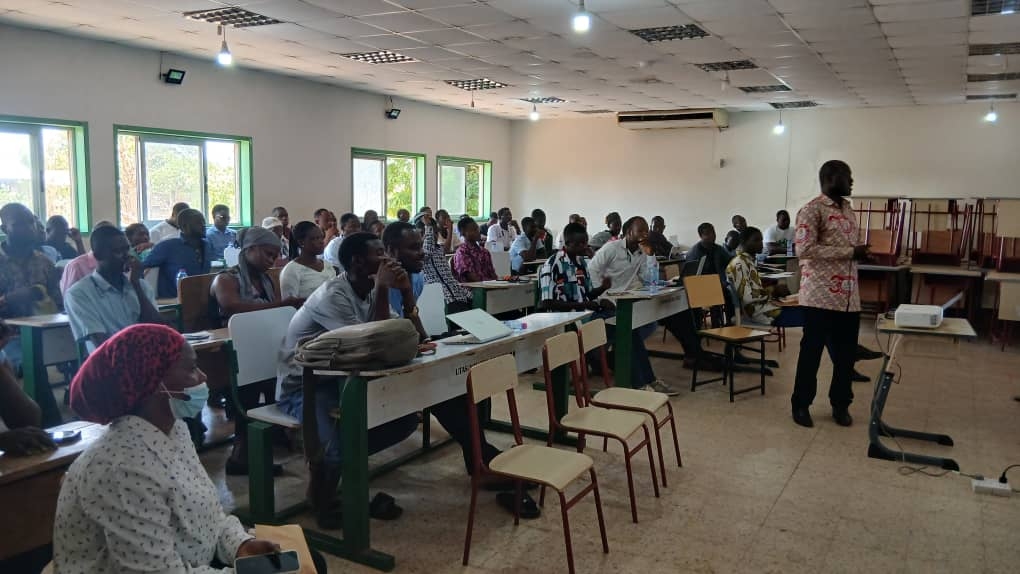
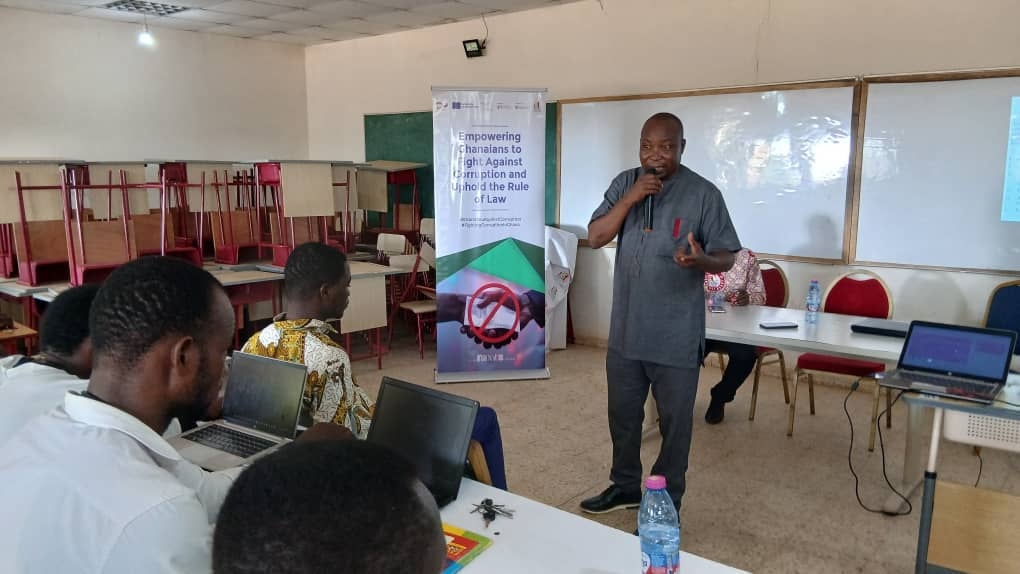
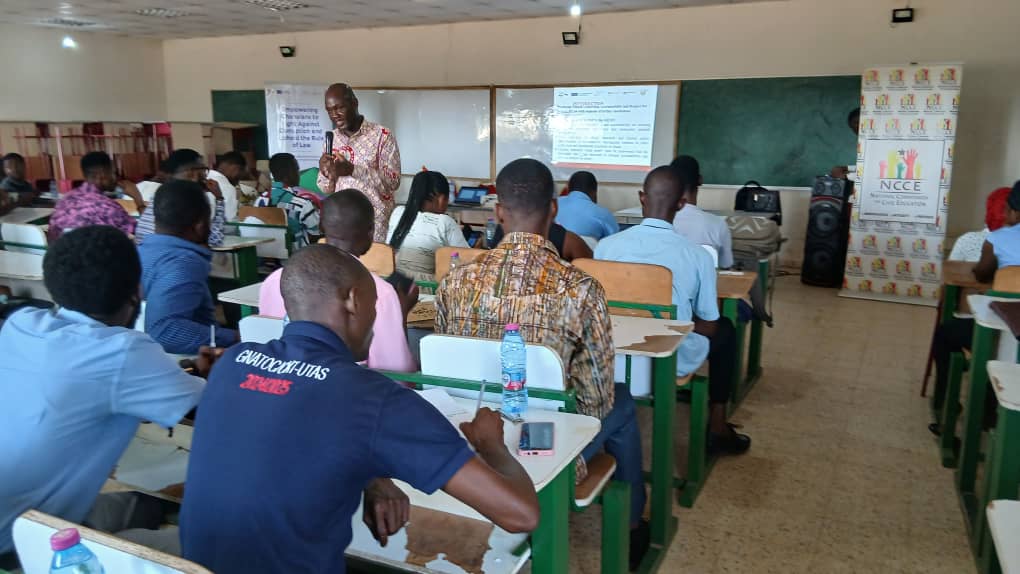
The engagement, organized by the Upper East Regional Directorate of the National Commission for Civic Education (NCCE) in collaboration with UTAS and supported by GIZ and the European Union, was held on Wednesday, 20th May 2026, at the Spanish Lab Audio Visual Conference Hall of the University.
The programme brought together the Dean of Students, the Student Representative Council, executives of various student associations, and other student leaders to discuss ethical leadership, accountability, and anti-corruption practices.
Delivering the opening remarks, the Deputy Regional Director of NCCE, Mr. Akugri A. Augustine, stated that the programme formed part of the Participation, Accountability and Integrity for a Resilient Democracy (PAIReD) initiative, which seeks to nurture a generation of youth ambassadors committed to transparency, integrity, and responsible leadership within their schools and communities.
Mr. Akugri emphasized that ethical leadership, transparency, and accountability remain essential pillars of democratic governance and sustainable national development. He expressed concern that weak adherence to ethical standards and limited public understanding of accountability systems continue to undermine public trust and institutional credibility in the country.
According to him, empowering young people with the knowledge, values, and confidence to demand accountability and promote integrity is necessary to building a resilient democracy. He further noted that practices such as conflict of interest and influence peddling threaten fairness, transparency, and public confidence in institutions.
The Principal Investigative Officer of the Commission on Human Rights and Administrative Justice (CHRAJ) in the Upper East Region, Mr. Edmond Alagpulinsa, also educated participants on ethical leadership, conflict of interest, influence peddling, abuse of office, and whistleblowing.
He described ethical leadership as the foundation of good governance and explained that leaders must demonstrate honesty, fairness, discipline, professionalism, integrity, and commitment to the public interest.
Mr. Alagpulinsa cautioned against influence peddling, describing it as the abuse of authority or personal connections to gain unfair advantage, which weakens meritocracy, transparency, and justice. He also advised leaders to avoid conflicts of interest where personal or financial interests may influence official decisions.
On whistleblowing, he educated students on the Whistleblower Act, 2006, explaining that cases involving corruption and mismanagement can be reported to institutions such as the Ghana Police Service, CHRAJ, the Economic and Organized Crime Office (EOCO), the National Media Commission, chiefs, and religious leaders.
In his concluding remarks, the Dean of Students of UTAS, Professor Ohene Boansi Apiah, commended the NCCE and its partners for organizing the programme and urged students to apply the lessons learned in their academic, social, and leadership responsibilities.
_
Follow us on our social media pages for more stories and posts from the NCCE.

https://www.instagram.com/nccegh/

https://www.facebook.com/nccegh/
Leave a comment