For Ghana’s young people, leadership is not something that begins only after graduation or when they occupy public office. It starts with the choices they make today, the values they uphold, and their willingness to speak up when they see wrongdoing.
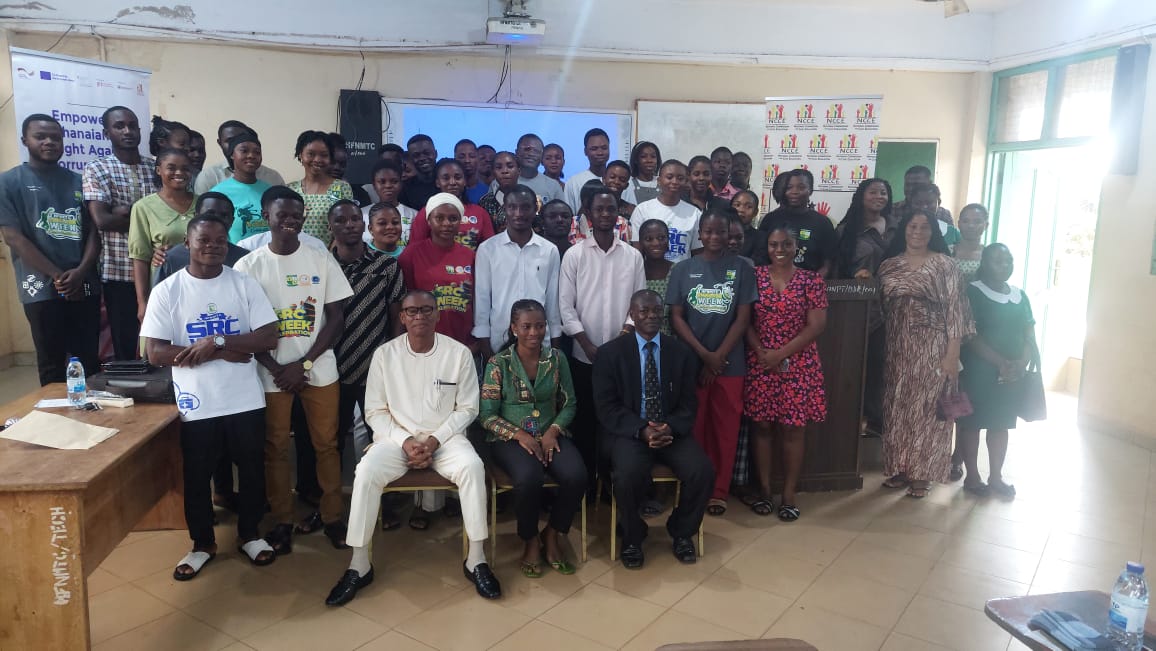
With this in mind, the Bono East Regional Directorate of the National Commission for Civic Education (NCCE) has engaged student leaders from selected tertiary institutions in the region to strengthen their understanding of transparency, accountability, anti-corruption and ethical leadership.
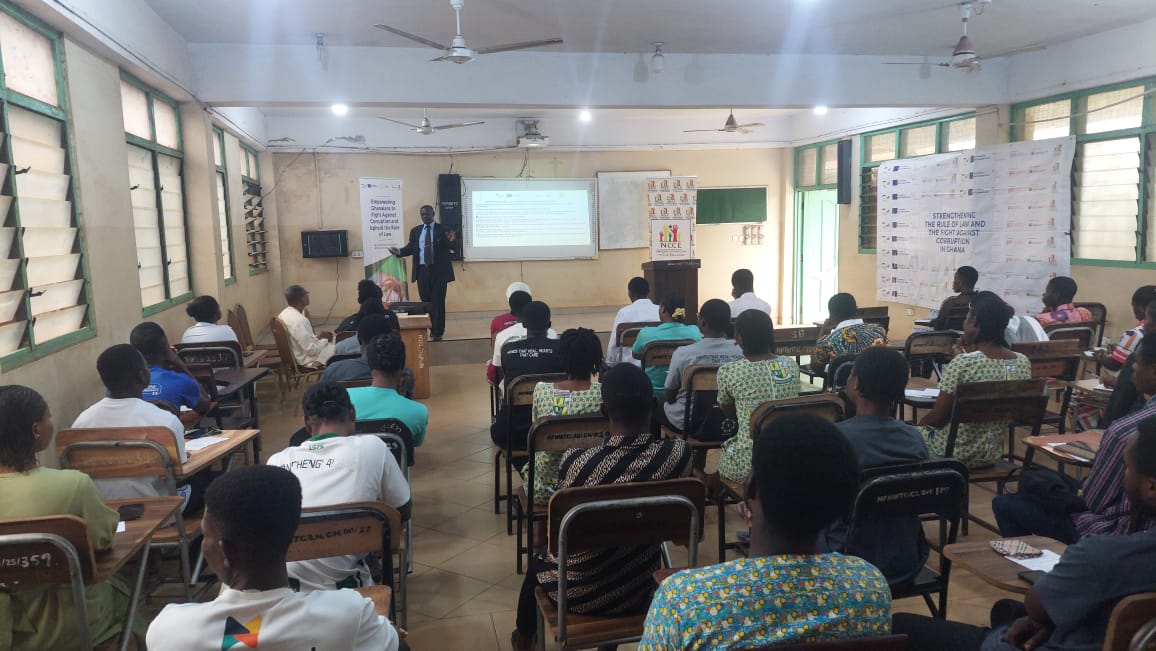
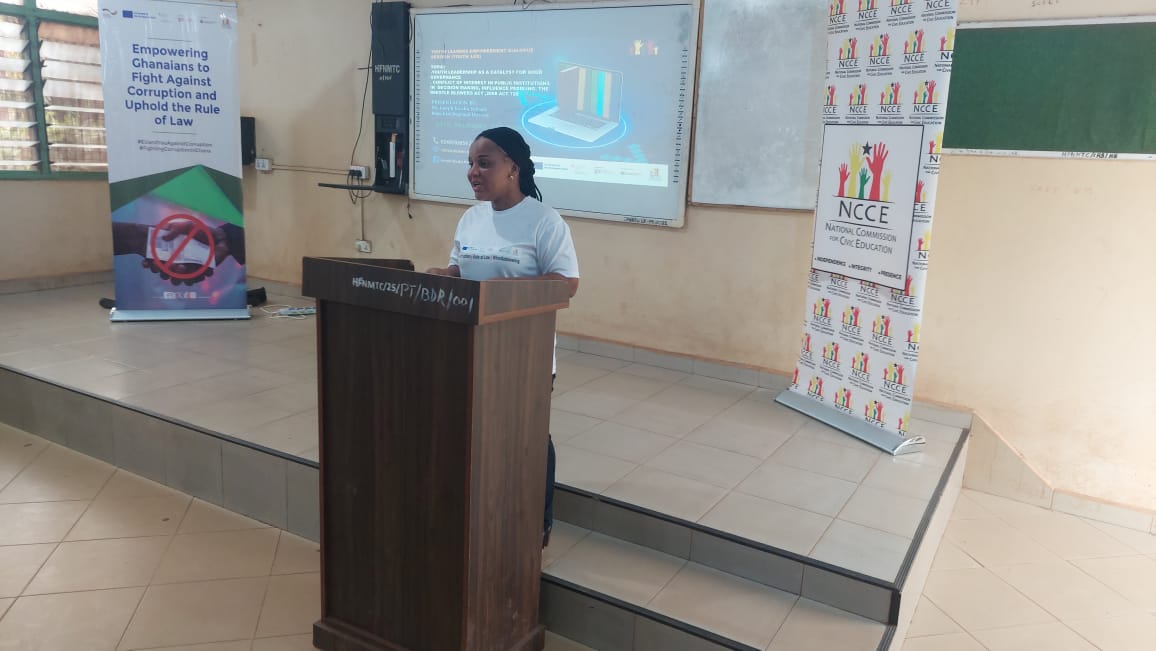
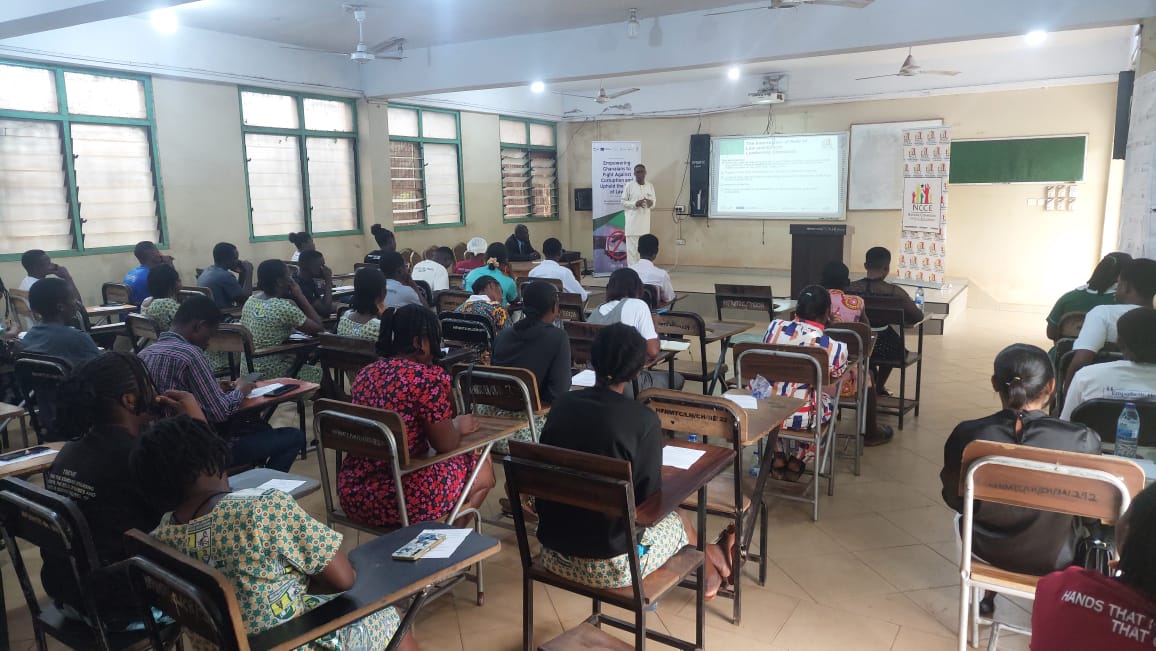
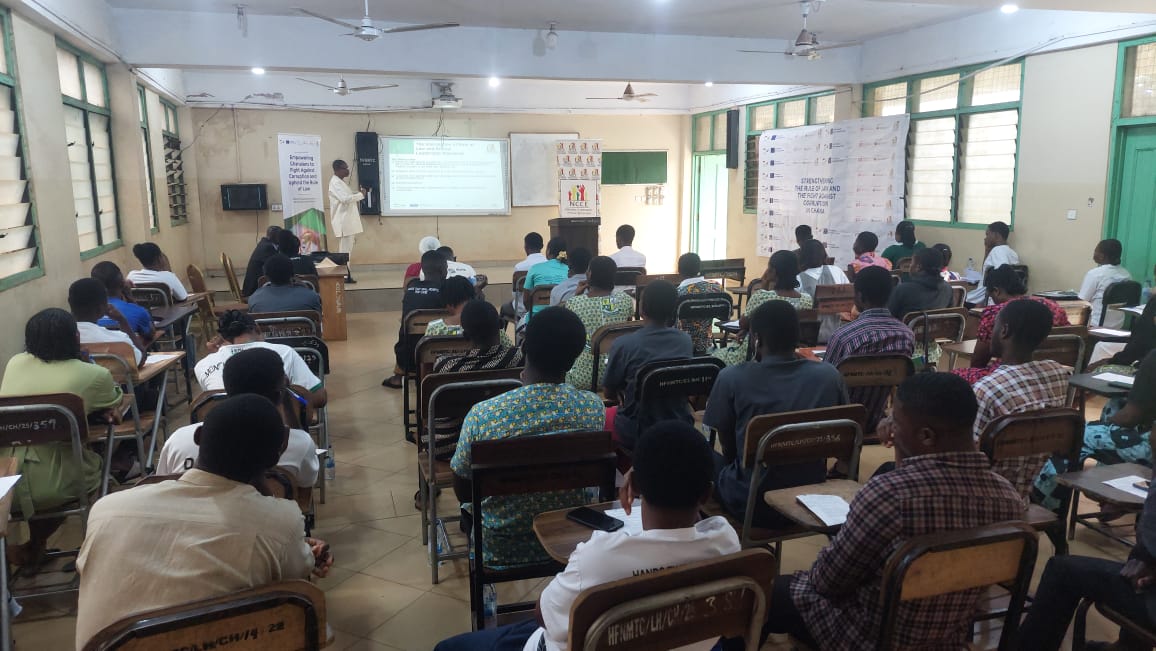
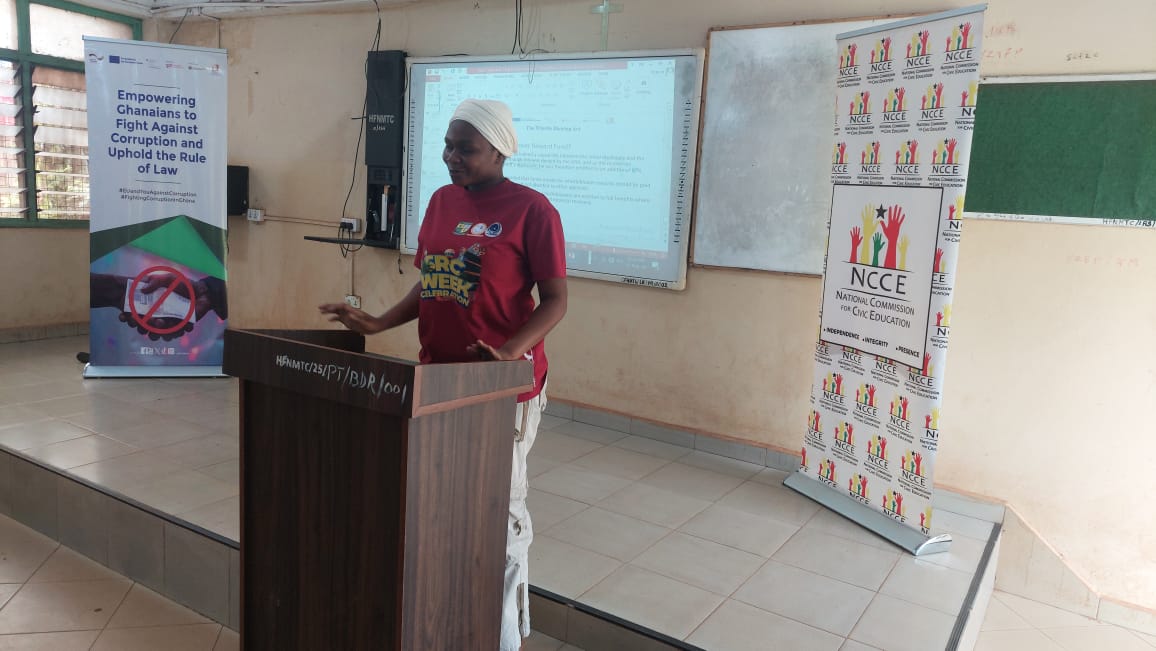
The engagement, held at the lecture hall of the Holy Family Nursing and Midwifery Training College (HFNMTC), Techiman, formed part of the Youth Leaders’ Empowerment Dialogue Sessions (Youth-Led).
The session brought together student leaders from the Holy Family Nursing and Midwifery Training College (HFNMTC), the University of Cape Coast (UCC) Institute of Distance Learners, and the University of Education, Winneba (UEW) Institute of Distance Learners.
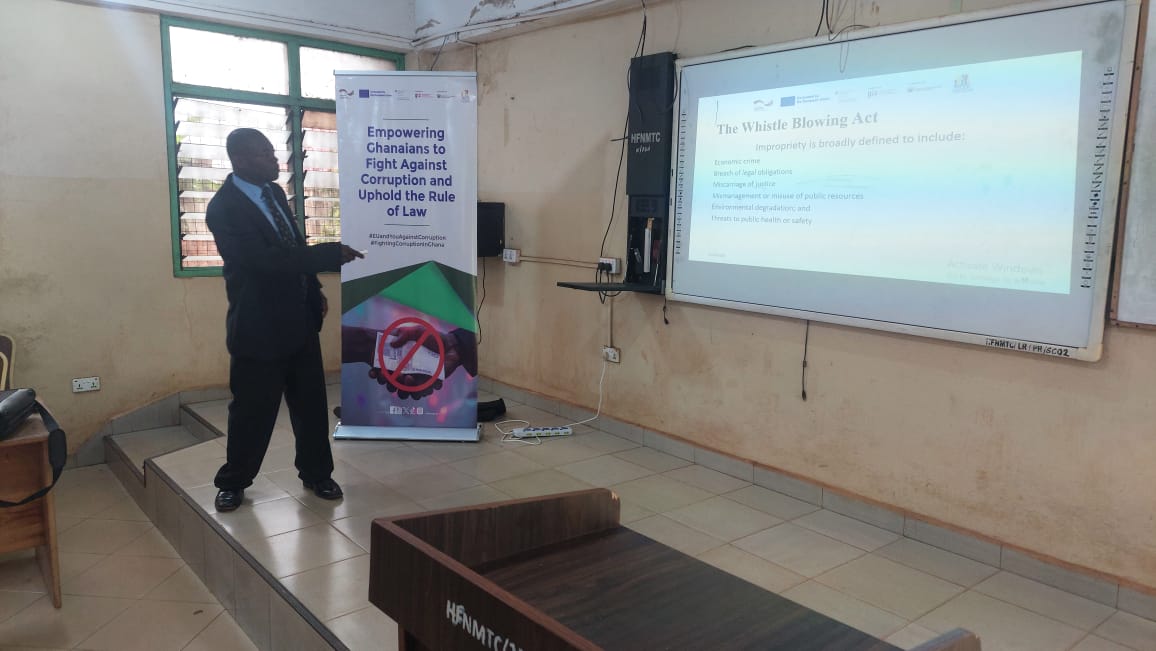
The dialogue sought to encourage young people to take a more active role in promoting accountability and transparency, while equipping them with knowledge of anti-corruption laws, including the Whistleblower Act, 2006 (Act 720), and the importance of ethical leadership in protecting Ghana’s democratic gains. The Act provides a framework for the disclosure of information concerning unlawful conduct and corrupt practices, as well as protection for persons who make such disclosures.
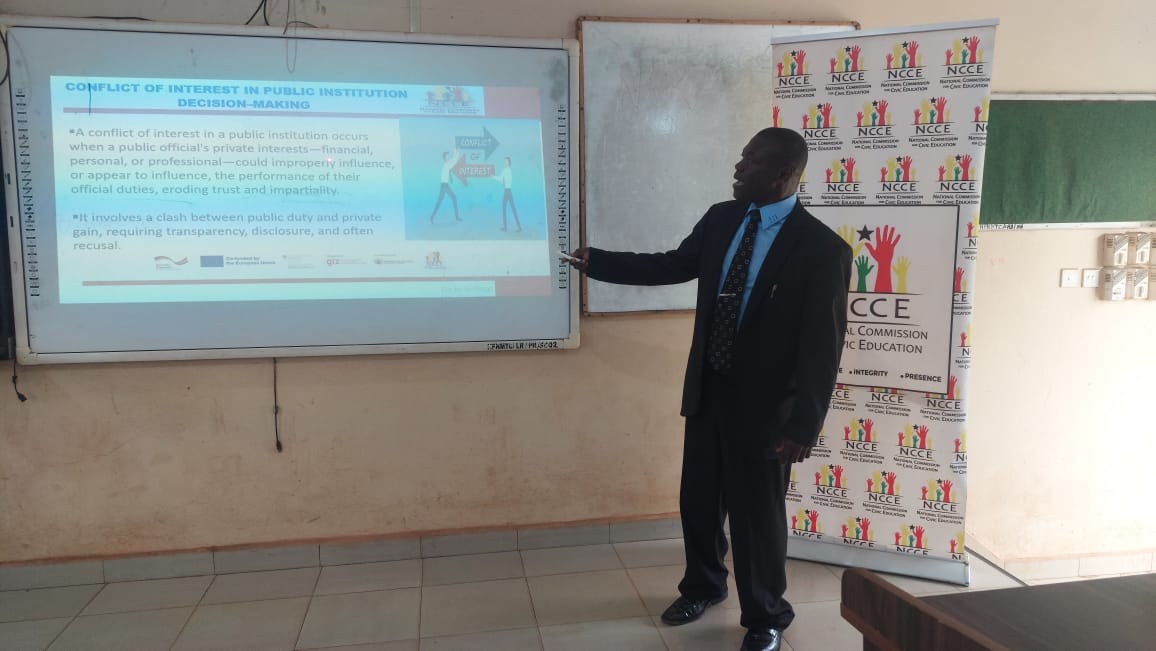
Addressing the student leaders, the Bono East Regional Director of the NCCE, Mr. Joseph Kwaku Yeboah, emphasised that young people have an important role to play in shaping Ghana’s governance system.
Through a PowerPoint presentation, Mr. Yeboah noted that the youth have the potential to drive institutional innovation, demand open and accountable governance, and contribute to public policies that respond to the aspirations and realities of the younger generation.
He explained that youth participation in governance should extend beyond voting during elections to include active involvement in decision-making, monitoring public institutions and using established legal mechanisms to report suspected wrongdoing.
“Young people must see themselves not only as future leaders, but as citizens with a role to play in governance today,” he said.
Mr. Yeboah further encouraged the student leaders to use their positions as influencers within their institutions to promote integrity, responsibility and responsible citizenship.
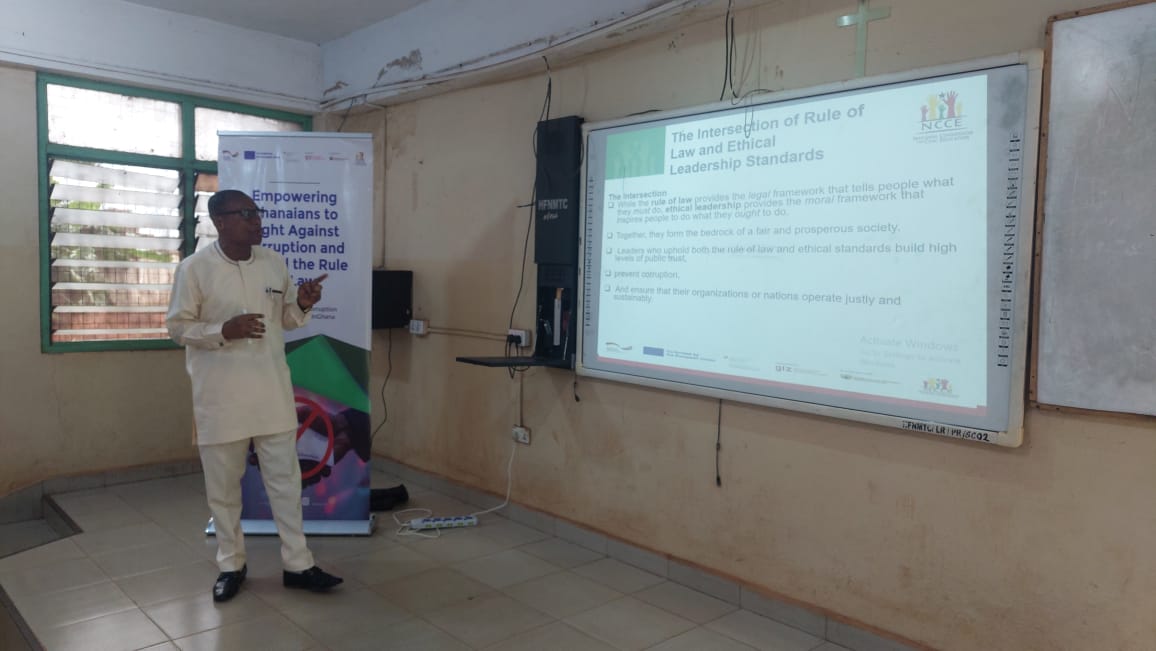
In a related presentation, the Chairman of the Bono East Regional Peace Council, Rev. Prince Owusu Essekou, focused on Rule of Law and Ethical Leadership Standards, describing adherence to the rule of law and ethical conduct as important foundations for fairness, accountability, justice, peace and national development.
He urged the young leaders to understand the connection between obeying the law and demonstrating ethical conduct, particularly as they prepare to take up leadership responsibilities in their communities and the country.
According to Rev. Essekou, strengthening these values among emerging leaders would contribute to a society where institutions are accountable, laws are fairly applied, and citizens can access justice without discrimination.
The session was also supported by Mr. Henry P. K. Horvey, Regional Accountant; Mr. Muru David, Regional Internal Auditor; Ms. Afusatu Yekeen, Regional Programmes Officer; Mr. Louis Nelly Nyarko, Regional Administrator; and Ms. Priscilla Akomah, Administrative Officer.
The engagement ultimately sought to deepen youth leaders’ understanding of transparency, accountability and ethical leadership as essential principles of democratic governance; increase their awareness of anti-corruption laws and accountability mechanisms; and strengthen their capacity to champion integrity and responsible citizenship within their institutions and communities.
The Youth Leaders’ Empowerment Dialogue is part of broader efforts by the NCCE and its partners to equip young people with the knowledge and civic skills needed to contribute meaningfully to democratic governance and the fight against corruption. Similar NCCE youth dialogues in other regions have also focused on ethical leadership, accountability, and the rule of law.
_
Follow us on our social media pages for more stories and posts from the NCCE.

https://www.instagram.com/nccegh/

https://www.facebook.com/nccegh/
https://www.youtube.com/channel/UCwajFJmmlmzRf1OMM.
Leave a comment