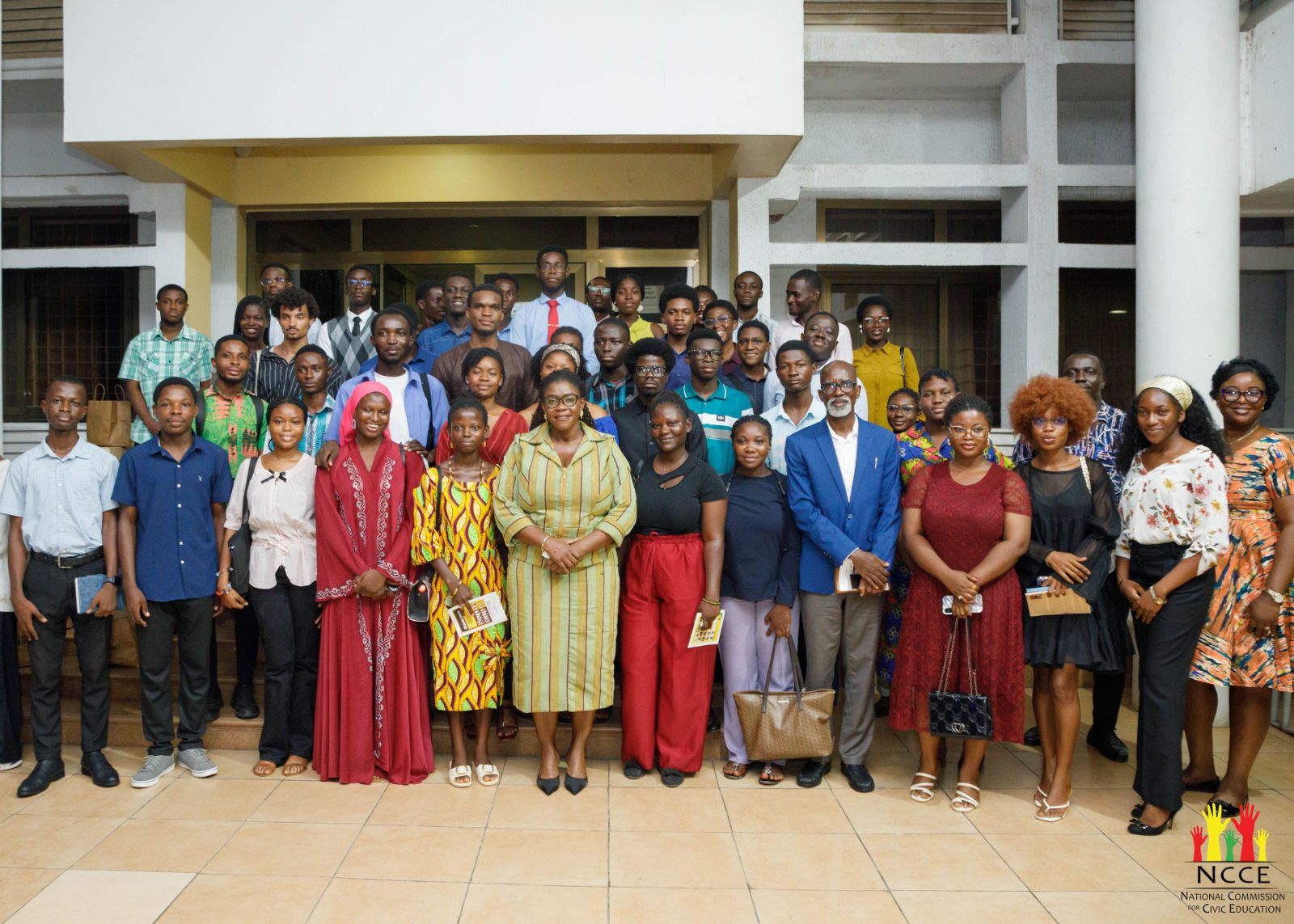
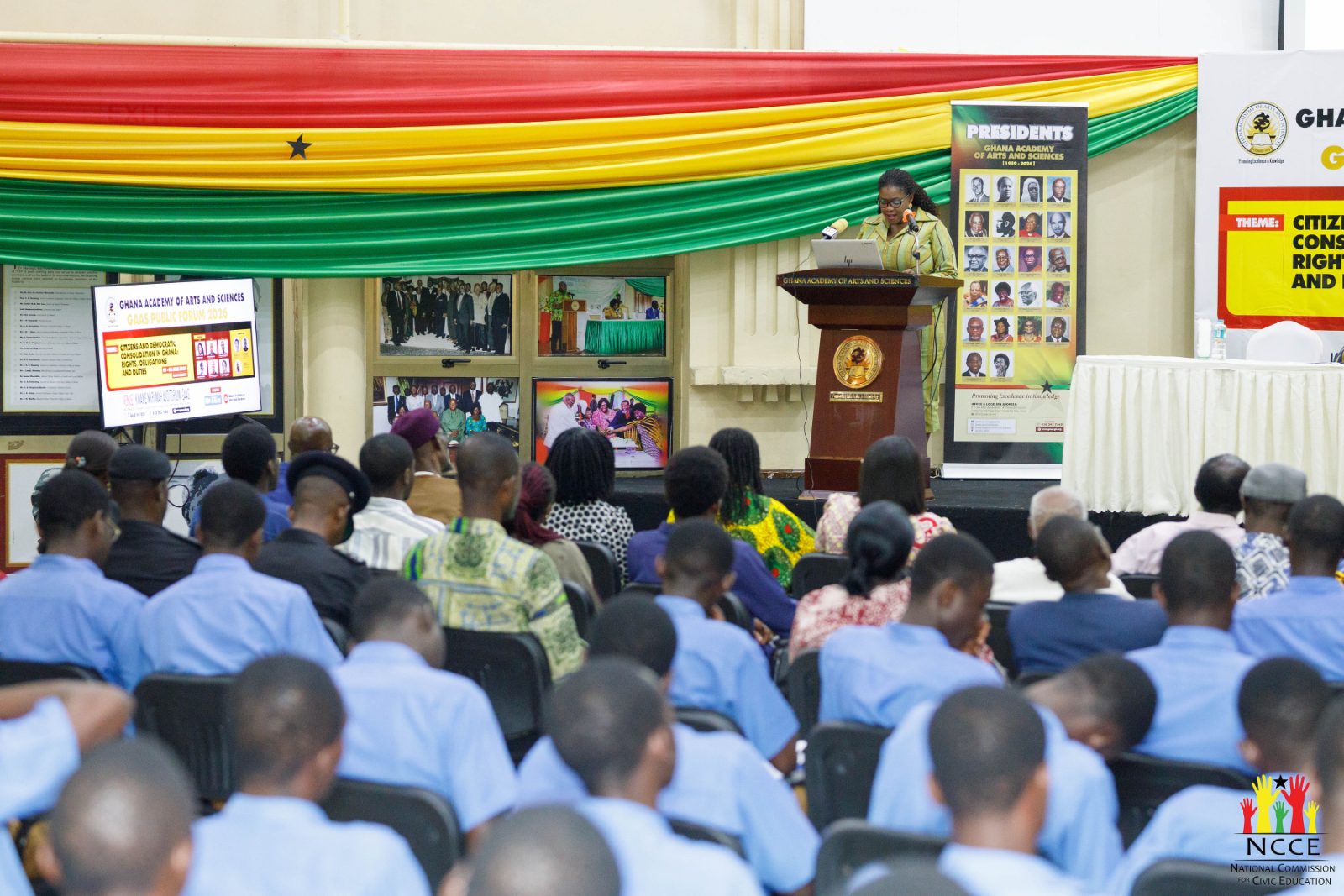
Chairperson of the National Commission for Civic Education (NCCE), Ms. Kathleen Addy, has warned that declining public trust, growing economic hardship, and governance challenges are straining Ghana’s democracy, but identified civic education as a key pillar to ameliorate the situation. She made this statement on the first day of the three-day public forum organised by the Ghana Academy of Arts and Sciences under the theme, “Citizens and Democratic Consolidation in Ghana: Rights, Obligations, and Duties”.
Addressing the participants on the sub-theme, “Reflections on a New Social Contract with Citizens in Ghana”, she noted that although the 1992 Constitution has secured more than three decades of democratic stability, many citizens increasingly perceive a gap between its promises and their lived realities.
Citing recent Afrobarometer findings, Ms. Addy noted that a majority of Ghanaians rate both the national economy and their personal living conditions negatively, adding that youth unemployment, corruption concerns and perceptions of unequal access to opportunities are further weakening public confidence in democratic governance. "The challenge is not only economic recovery but whether citizens continue to believe that the state exists fundamentally for their welfare," she stated.
The Chairperson further observed that while Ghana has successfully maintained electoral democracy, democratic legitimacy must extend beyond elections to include accountability, inclusion and responsive governance, cautioning that the country risks democratic fatigue if citizens continue to feel excluded from decision-making and economic progress.
To strengthen the relationship between citizens and the state, she called for a renewed social contract built on ethical leadership, stronger accountability, economic inclusion, youth empowerment and greater citizen participation.
Underscoring the importance of civic education, she intimated that democracy depends not only on institutions and laws but also on citizens who understand their rights, responsibilities and the workings of government. According to her, civic education promotes constitutional literacy, encourages active citizenship and equips citizens to hold leaders accountable while fulfilling their own civic obligations.
"The sustainability of our democracy depends on citizens who see themselves not merely as voters but as active stakeholders in national development," she opined.
Describing the current dispensation as a critical moment in Ghana's democratic journey, Ms. Addy maintained that citizens' continuous belief in the state honouring its side of the social contract is a measure to restoring trust between citizens and the state.







_
Follow us on our social media pages for more stories and posts from the NCCE.

https://www.instagram.com/nccegh/

https://www.facebook.com/nccegh/
Leave a comment